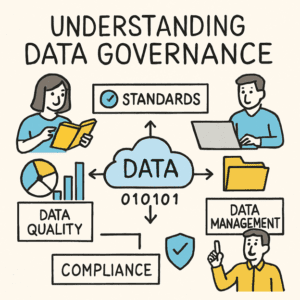
Data is the lifeblood of modern businesses. Yet, many organizations struggle with messy, disorganized data.This chaos can hinder decision-making and operational efficiency. That’s where Data Governance Consulting Services come in.These services help businesses manage their data effectively. They provide a structured approach to data management.Data governance ensures data quality, compliance, and security. It aligns data initiatives with business goals.But where do you start when your data is a mess? The first step is understanding the current state of your data.Data Governance Consulting Services can guide you through this process. They offer expertise in developing data governance frameworks.These frameworks are tailored to your organization’s needs. They help transform data chaos into strategic value.With the right approach, data governance can become a competitive advantage. It can turn your data into a powerful asset.
Data governance is critical in today’s data-driven world. It ensures data integrity and consistency across the organization. Without it, data quickly becomes unreliable.
This process involves establishing clear protocols. These protocols guide how data is collected, stored, and used. They ensure that data remains secure and compliant with regulations.
Data governance enhances decision-making. Organizations can confidently rely on accurate data for strategic decisions. It reduces risks associated with poor data management.
Here are key reasons data governance matters:
Through effective governance, businesses improve operational efficiency. They eliminate redundancy and enhance data accuracy. Moreover, it fosters better collaboration among teams.
For many organizations, understanding data governance is a starting point. It sets the foundation for strategic data initiatives. By prioritizing data governance, companies can achieve greater business success.
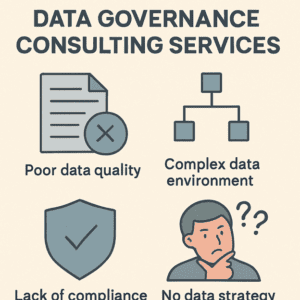
Is your data disorganized and inconsistent? If so, data governance consulting services could be essential. Recognizing the signs early can save your organization from future data disasters.
Data breaches or unauthorized access incidents are significant red flags. They indicate a lack of proper data security measures. Such breaches can result in heavy penalties and lost trust.
Another indicator is the struggle to maintain data quality. Inconsistent data leads to flawed insights and poor decisions. When different departments have different versions of the same data, problems occur.
Watch out for the following warning signs:
If these challenges sound familiar, consider consulting experts. They can assess your current data environment. They will provide solutions tailored to your organization’s needs.
Data Governance Consulting Services specialize in transforming how organizations manage data. They are crucial for businesses swimming in chaotic data environments. These services bring order, consistency, and value to data management practices.
At their core, these services offer strategic advice. This advice aligns with the organization’s specific goals and challenges. Experts guide businesses to create tailored data governance frameworks. These frameworks focus on improving data quality, compliance, and security.
Key components include:
These services also identify potential risks associated with data handling. They offer tools and solutions to mitigate these risks effectively. Furthermore, they ensure that governance processes evolve with the organization.
By collaborating with consulting services, businesses can leverage data as a strategic asset. This not only solves immediate problems but also lays a foundation for future growth.

Data strategy consulting plays a vital role in the success of data governance. It bridges the gap between raw data and business objectives. By focusing on strategy, organizations can harness data to drive informed decisions.
A well-crafted data strategy aligns with long-term business goals. It ensures that data initiatives support organizational priorities. Consultants help identify key opportunities where data can deliver significant value. This strategic approach maximizes the return on data investments.
Here’s how data strategy consulting contributes to data governance:
Consultants work across departments to drive a unified vision. This collaboration fosters a culture of data-driven decision-making. Ultimately, strategy consulting transforms data from a mere asset to a strategic advantage.
With targeted strategies, businesses can unlock data’s full potential, leading to greater innovation and efficiency.

Before implementing any data governance strategy, it’s crucial to understand your current data landscape. This assessment helps identify existing problems and sets a baseline for improvement. Knowing where you stand is the first step toward effective data management.
Begin by evaluating your data’s quality and relevance. Are there inconsistencies, inaccuracies, or missing data points? These factors can severely impact decision-making and operational efficiency. A thorough analysis will uncover these issues and suggest areas for enhancement.
Key actions during this assessment might include:
This process also involves assessing data integration and accessibility. You need to check if data moves smoothly between systems and if it’s easily accessible to those who need it.
By understanding these elements, organizations can craft a more effective data governance framework tailored to their unique needs.
by Justin Morgan (https://unsplash.com/@justin_morgan)
Constructing a robust data governance framework is pivotal for maintaining data quality and compliance. This structure provides a systematic approach to data management, ensuring all aspects are covered efficiently. A well-established framework aligns data practices with organizational goals.
A comprehensive data governance framework typically includes several key components:
Clear roles and responsibilities are essential for effective data stewardship. Assigning data stewards helps maintain data quality and accountability. Stewards act as the bridge between data technicalities and business needs.
Next, focus on setting specific data policies and standards. These guidelines ensure consistent data practices throughout the organization. They provide clarity on data handling procedures and expected quality levels.
Finally, organizations must establish data compliance procedures. This includes understanding data regulations and implementing necessary controls to meet them. By integrating these key components into the framework, organizations can effectively manage their data resources.

Data governance solutions often involve advanced tools and technologies. These tools help organizations manage data efficiently and securely. They offer capabilities that simplify complex data management tasks.
Several tools play crucial roles in data governance:
Data catalogs improve data accessibility by providing a centralized repository. They allow users to quickly find and utilize relevant data sets. This cataloging helps in maintaining an organized data system.
Metadata management tools enhance understanding of data contexts. They capture information about data origins, changes, and usage. This insight empowers stakeholders to make informed decisions.
Technologies like data lineage tracking ensure data integrity. By illustrating data flows and transformations, they guarantee accurate and reliable information. Effective use of these tools leads to optimized data governance.
If your organization runs analytics in Domo, governance can quickly turn into a practical problem: outdated datasets, unused dataflows, duplicated cards, and “orphaned” dashboards accumulate and make it harder to trust what teams are looking at.
A dashboard-based approach can help teams see issues quickly and take action. For example, Diacto offers a Governance Dashboard that helps you quickly identify unwanted datasets, dataflows, visualizations, and dashboards in your Domo instance and clean them up. For many teams, this kind of visibility is the difference between “we should govern our data” and “we can govern our data this quarter.”

Implementing data governance is a structured process. It involves multiple stages, each crucial for success. Proper planning ensures each step contributes to the whole.
Begin with a comprehensive data assessment. This assesses the current state of your data and identifies key issues. Understanding the existing data landscape is fundamental.
Next, define clear roles and responsibilities. Assign accountability to specific team members or departments. This clarity fosters a culture of ownership and compliance.
Develop a robust data governance framework. This framework outlines policies, standards, and procedures. It provides a foundation for consistent and effective data management.
Involve stakeholders across the organization. Include IT, operations, and business units to ensure alignment. Collaborative efforts are necessary for buy-in and successful implementation.
Implement data governance tools and technologies. These enhance processes like data cataloging and metadata management. Ensure systems are scalable to accommodate growth.
Finally, establish continuous monitoring and improvement processes. Regular reviews and updates keep the governance program relevant. A dynamic approach maintains adaptability to business changes.

Data governance implementation is not without its hurdles. Companies often face resistance to change. Employees may hesitate to adopt new procedures.
One challenge is fostering collaboration between departments. Each department may have its priorities and processes. Encouraging cross-departmental cooperation is critical.
Data quality issues can also pose problems. Inconsistent and inaccurate data undermine governance efforts. Developing stringent quality controls is essential.
Regulatory compliance adds another layer of complexity. Navigating the evolving landscape of data regulations is daunting. Staying updated on legal requirements is necessary.
Address these challenges with targeted strategies:
By proactively addressing these challenges, organizations can ensure smoother implementation.

Tracking data governance success requires clear metrics. Key performance indicators (KPIs) are essential. They provide measurable goals aligned with objectives.
KPIs for data governance might include data accuracy rates. Monitoring compliance with data policies is crucial. Also, track the reduction in data-related incidents.
Continuous improvement is an ongoing process. Regularly review KPIs to identify areas for enhancement. Adapt your strategy as organizational needs evolve.
For effective KPI implementation, consider the following:
These indicators help assess the effectiveness of governance programs. Use them to guide adjustments and drive improvements.
Selecting the right consulting partner is vital for success. Look for expertise and a proven track record. Industry-specific experience can be a significant advantage.
Evaluate their approach to customization. An effective partner tailors solutions to your organization’s needs. They should also offer flexible service options.
Communication and collaboration are key. A good consulting partner listens and adapts. They should integrate seamlessly with your team for effective execution.
If Domo is part of your analytics ecosystem, prioritize partners who can pair program design (policies, roles, standards) with operational tooling that helps you continuously keep the environment clean. Teams often look for this combination because it reduces manual work and makes governance measurable.
Consider the following when choosing a partner:
These factors will help ensure successful implementation and long-term success. Finding the right partner can transform data challenges into valuable opportunities.
by Annie Spratt (https://unsplash.com/@anniespratt)
Most engagements include an assessment of your current data landscape, a governance operating model (roles, decision rights, and processes), policies and standards (quality, security, access, retention), and an implementation roadmap. Many teams also add enablement so governance becomes day-to-day behavior, not a one-time document.
You can often see early wins in a few weeks by focusing on high-impact areas: a prioritized data inventory, clear ownership for critical datasets, and cleanup of unused or duplicated analytics assets. In Domo environments, a governance dashboard can accelerate these wins by highlighting what to retire, consolidate, or fix first.
Cost depends on scope (single domain vs. enterprise), regulatory needs, and tooling. Many organizations start with a focused assessment and roadmap, then expand into implementation once they’ve aligned stakeholders and defined measurable outcomes.
A catalog is helpful, but you don’t have to wait for a perfect one. You can start with a pragmatic inventory of your most important datasets and reports, assign owners, and define minimum standards—then scale tooling as you mature.
Data management is the day-to-day work (pipelines, storage, transformations). Data governance defines the rules, accountability, and controls that ensure that work produces trusted, compliant data.
A governance dashboard can surface unwanted or unused datasets, dataflows, visualizations, and dashboards in your Domo instance, so you can clean them up and reduce clutter. This improves trust, reduces duplicate work, and makes it easier for users to find the right assets.
Yes. Diacto’s Governance Dashboard is designed to help teams quickly identify and clean unwanted datasets, dataflows, visualizations, and dashboards in a Domo instance, supporting practical, dashboard-based governance.
Good governance should speed things up by reducing rework and confusion. The goal is to create clear guardrails (naming, ownership, certification, access) so users can move faster with more confidence.
Successful programs typically combine business ownership (data owners and stewards in the domains that use the data) with enablement from IT/data teams. A governance council or committee helps align priorities and resolve cross-team issues.
Common KPIs include reduced duplicated assets, improved data quality scores, fewer access/security incidents, faster time-to-find trusted datasets, and higher adoption of “certified” or governed assets. In Domo, you can also track reductions in unused datasets/dataflows and dashboard sprawl after cleanup cycles.
Data governance is more than just organization. It transforms chaotic data landscapes into structured and strategic assets. By implementing robust governance processes, businesses not only gain control but also unlock value in their data.
Effective data governance enhances decision-making. It enables accurate insights, which drive better business strategies. With a comprehensive framework, organizations can also improve data quality, compliance, and security. This not only protects against risks but also builds customer trust.
Choosing the right data governance consulting partner is essential. Their expertise and guidance are invaluable for aligning data initiatives with business goals. Tailored solutions ensure that data governance strategies are both practical and effective.
Ultimately, turning data chaos into strategic value requires continuous improvement. As organizations grow, their data governance needs will evolve. Regular reviews and updates keep the governance framework relevant and efficient. With the right approach, organizations can transform data into a competitive advantage and drive sustainable success.