In today’s data-driven economy, migrating to a modern cloud data platform is no longer just a technological upgrade; it is a strategic necessity. Among the leading solutions available, Snowflake has emerged as a powerhouse, offering unparalleled flexibility, concurrency, and performance. However, unlocking its full potential requires more than just signing up for an account.
Setting up infrastructure, managing costs, securing sensitive data, and building efficient pipelines all demand specialized expertise. This is exactly where Snowflake Consulting and Assistance Services come into play. Whether you are transitioning from legacy systems or looking to optimize an existing cloud environment, expert guidance ensures your investment delivers maximum ROI.
But how do you know when it is time to bring in the experts? Let’s explore the critical scenarios that signal your business is ready for professional snowflake consulting.
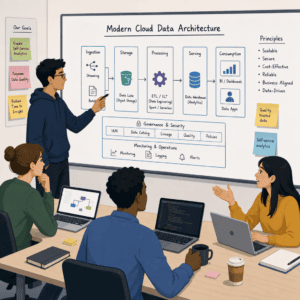
The journey to the Data Cloud is exciting, but a poorly planned migration can lead to budget overruns, data silos, and operational downtime.
If you are moving away from legacy, on-prem systems, you are likely facing a complex web of historical data and outdated pipelines. Successfully migrating on-premise databases to Snowflake cloud is rarely a simple “lift and shift” operation. It requires a meticulous approach, beginning with creating a data cloud migration strategy.
Consultants help you assess your current data landscape, identify dependencies, and map out a phased migration that minimizes disruption. They also assist in fundamental decision-making, such as evaluating Snowflake vs BigQuery for large scale analytics. By analyzing your specific workload requirements, query patterns, and budget, an expert can definitively tell you which platform aligns best with your long-term business goals.
Furthermore, choosing the right tier of service is crucial. Experts provide clarity by comparing Snowflake Standard vs Enterprise editions, ensuring you don’t overpay for features you don’t need, or conversely, miss out on essential security and compliance features like Time Travel extensions or multi-cluster warehouses.
Once the migration strategy is set, the focus shifts to architecture. Snowflake’s unique separation of compute and storage allows for highly innovative data models, but it requires a modern approach to engineering.
A core strength of Snowflake is its ability to handle both structured and semi-structured data seamlessly. If your organization is outgrowing traditional data warehousing, professional consultants can guide you in architecting a scalable data lakehouse. This hybrid approach combines the flexibility of a data lake with the robust governance and performance of a data warehouse, giving your data science and analytics teams a single source of truth.
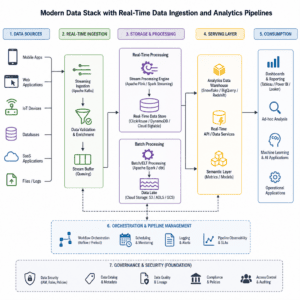
Snowflake rarely operates in isolation. It acts as the robust engine within a broader “Modern Data Stack.” Bringing in expert snowflake support ensures you are seamlessly integrating Snowflake with Fivetran and dbt.
Setting up these integrations correctly from day one prevents data bottlenecks and empowers analysts to build reliable data models.
Batch processing is often insufficient for modern business applications that require immediate insights. If your business needs streaming data—such as IoT sensor readings, e-commerce clicks, or financial transactions—experts can implement real-time data ingestion using Snowpipe. Snowpipe continuously loads micro-batches of data into Snowflake as soon as it arrives in your cloud storage, ensuring your dashboards always reflect the current reality without tying up your main compute resources.
One of the most common reasons companies seek out Snowflake Consulting and Assistance Services is to gain control over their cloud spend. Because Snowflake allows instant scaling and charges based on compute usage, costs can spiral if the environment is poorly configured.
Nobody likes “bill shock” at the end of the month. Establishing robust snowflake cost management and credit optimization practices is vital. Consultants implement resource monitors, auto-suspend rules, and usage dashboards to track exactly which departments or queries are consuming the most credits.
A major part of this financial governance involves optimizing warehouse size for query performance. It can be tempting to simply spin up an Extra-Large (XL) warehouse to make a slow query run faster. However, experts will dive into the query profiles to optimize the SQL code itself, define proper clustering keys, and size the virtual warehouse appropriately. They ensure you are using smaller warehouses for lightweight reporting and only spinning up massive compute clusters for heavy, complex transformations.
As data becomes your most valuable asset, protecting it and ensuring compliance with global privacy regulations (like GDPR, CCPA, or HIPAA) is non-negotiable.
While Snowflake is inherently secure, customizing its security features to your organization’s specific compliance needs requires specialized knowledge. A consulting partner can take the lead in configuring end-to-end data encryption in Snowflake, managing encryption keys securely, and setting up network policies that restrict access to known IP addresses.
Establishing who can see what data is critical. Consultants are adept at implementing enterprise data governance frameworks, ensuring data quality, lineage, and cataloging are maintained.
A common stumbling block for new Snowflake users is managing user roles. A consultant will often provide a step by step guide to Snowflake role hierarchy, tailoring it to your company structure. A best-practice hierarchy typically involves:
Modern businesses do not operate in silos; they need to share data with partners, vendors, and clients. Instead of relying on risky FTP transfers or emailing spreadsheets, an expert can show you how to leverage Snowflake’s data-sharing capabilities. They will set up secure data sharing across different Snowflake accounts, allowing external partners to query live, read-only data without moving a single file, thereby maintaining a single source of truth and absolute security.

Recognizing you need help is the first step. The next is finding the right people for the job and ensuring they leave your internal team stronger than before.
Not all consultants are created equal. When evaluating your options, what to look for in a certified Snowflake partner should include:
The ultimate goal of bringing in external help shouldn’t be permanent dependency. The best consultants prioritize internal team upskilling for Snowflake administration. Whether it is teaching your database administrators how to read query execution plans, training data engineers on Snowpark, or helping analysts build efficient dashboards, knowledge transfer is a crucial component of any consulting engagement.
Transitioning to Snowflake is a transformative move for any business, offering the speed and scale required to stay competitive in a fast-paced digital landscape. However, the complexities of migration, architecture, cost optimization, and security are substantial.
By leveraging professional Snowflake Consulting and Assistance Services, you bypass the steep learning curve and avoid costly mistakes. From seamlessly integrating modern ELT tools to locking down enterprise-grade security, expert guidance ensures your data platform is built for performance, resilience, and maximum return on investment. If your business is ready to stop wrestling with infrastructure and start extracting actionable insights, it is time to bring in the Snowflake experts.