Enterprise data environments have become too complex, too distributed, and too business-critical to rely on ad hoc pipelines or isolated analytics projects. Today, CIOs, CTOs, CDOs, and data leaders are expected to unify data across cloud applications, legacy systems, SaaS platforms, IoT sources, customer touchpoints, finance tools, and operational systems while maintaining performance, governance, security, and cost control.
That is why many enterprises turn to specialized data engineering service providers to design, build, and optimize scalable cloud data platforms. The right partner brings architecture depth, delivery discipline, automation, governance expertise, and hands-on engineering capacity that internal teams often cannot scale quickly enough on their own.
Below are the key reasons enterprise organizations choose expert partners for cloud data engineering, and how providers such as Diacto can help turn fragmented data ecosystems into reliable, analytics-ready platforms.
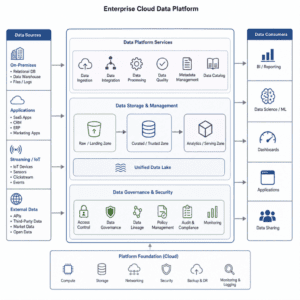
Enterprise modernization is rarely a simple migration from on-premises systems to the cloud. It usually involves rethinking how data is ingested, processed, modeled, governed, secured, and consumed across the business.
A strong data engineering partner helps organizations move beyond lift-and-shift thinking. Instead of merely relocating existing data workloads, they design cloud-native architectures that can support advanced analytics, self-service BI, AI initiatives, real-time dashboards, regulatory reporting, and operational intelligence.
This often includes:
Providers such as Diacto can support enterprises through this journey by combining strategic consulting with practical implementation, helping teams modernize faster without losing control of data quality, security, or business continuity.
Large organizations rarely operate in a clean, single-platform environment. Data may live across ERP systems, CRM tools, marketing platforms, data warehouses, data lakes, mainframes, spreadsheets, APIs, vendor portals, and industry-specific applications.
Experienced data engineering service providers understand how to work across these complex landscapes. They know how to integrate structured, semi-structured, and unstructured data from multiple sources while preserving business logic and minimizing downstream disruption.
This matters because enterprise data problems are rarely caused by one tool. They are usually caused by many interconnected challenges:
A mature partner brings cross-functional experience that helps enterprises see the full picture. Rather than treating data engineering as isolated pipeline development, they approach it as an enterprise capability that connects architecture, governance, analytics, operations, and business outcomes.
Modern cloud data platforms depend on strong data integration services. Without reliable integration, organizations struggle to create a single view of customers, products, transactions, suppliers, assets, employees, or financial performance.
Enterprise-grade integration is not just about moving data from point A to point B. It requires careful decisions about latency, schema management, error handling, orchestration, security, transformation logic, monitoring, and lineage.
A qualified data engineering partner helps enterprises design integration patterns such as:
The goal is not simply to centralize data. The goal is to make trusted data available to the right teams, systems, and decision workflows at the right time.
With experienced partners like Diacto, enterprises can build integration frameworks that are scalable, maintainable, and aligned with long-term cloud data strategy rather than short-term reporting fixes.
A scalable platform is only valuable if business teams trust the data it delivers. Poor data quality leads to inconsistent dashboards, inaccurate forecasts, slow decision-making, failed AI models, and loss of confidence in analytics investments.
Data engineering providers help enterprises establish quality controls throughout the data lifecycle. This can include automated validation rules, anomaly detection, deduplication, schema checks, reconciliation workflows, standardization logic, and data observability practices.
Common quality improvements include:
For enterprise decision makers, the business value is clear. Better data quality reduces operational risk, improves confidence in reporting, and allows teams to spend less time questioning numbers and more time acting on insights.
As organizations scale their cloud data platforms, they need more than pipelines and storage. They need enterprise-ready data management services that bring structure, accountability, and governance to the entire data ecosystem.
Data management includes the policies, processes, architecture, and controls that ensure data is accurate, secure, discoverable, accessible, and usable. Without it, cloud platforms can quickly become expensive, fragmented, and difficult to govern.
A data engineering service provider can help establish capabilities such as:
These services are especially important for enterprises operating in regulated industries, multi-region environments, or complex business structures. By combining engineering execution with data management discipline, organizations can scale their platforms without losing visibility or control.
Enterprise data volumes are growing rapidly, but scale is not just about storing more data. True scalability means the platform can support more users, more workloads, more data sources, more analytics use cases, and more business-critical applications without constant rework.
Experienced providers design cloud data platforms with scalability in mind from the beginning. They evaluate workload patterns, performance requirements, cost constraints, security needs, and business priorities before recommending architecture decisions.
Scalable architecture may include:
This approach helps enterprises avoid brittle platforms that work for one department but fail when extended across the business. A skilled partner ensures the architecture can evolve as data maturity grows.
Data platform projects often involve significant business expectations. Leaders may be funding modernization to improve executive reporting, enable AI, reduce operational costs, comply with regulations, or create better customer experiences.
When the stakes are high, delivery risk matters. Internal teams may already be stretched across operations, maintenance, stakeholder requests, and existing transformation programs. Data engineering providers add dedicated expertise and delivery capacity to keep initiatives moving.
They reduce risk by providing:
This is particularly valuable when timelines are tight or when the organization lacks specialized skills in cloud engineering, data orchestration, data modeling, or platform optimization.
Many enterprises invest in cloud data platforms because they want to become more analytics-driven or AI-ready. However, advanced analytics and AI depend on high-quality, well-modeled, accessible data.
Data engineering providers help build the foundation required for these initiatives. They ensure data pipelines are reliable, datasets are structured for analytical use, and data products are designed with downstream consumers in mind.
AI readiness often requires:
Without strong data engineering, AI programs can stall in experimentation. With the right foundation, enterprises can move from isolated proofs of concept to production-grade analytics and machine learning use cases.
Partners such as Diacto can help organizations connect cloud data engineering with business intelligence, analytics modernization, and AI enablement, ensuring that the platform is built for practical enterprise outcomes rather than technology experimentation alone.

Cloud platforms offer flexibility, but they can also become expensive if workloads are poorly designed. Inefficient queries, duplicated data, oversized compute resources, unoptimized storage, and uncontrolled pipeline execution can create unnecessary costs.
A data engineering service provider helps enterprises balance performance and cost. They identify inefficient workloads, optimize processing logic, right-size compute resources, reduce duplication, and design governance controls that prevent runaway spending.
Cost and performance optimization may include:
This is a major reason enterprises seek external expertise. The cloud gives organizations power and flexibility, but expert engineering ensures that power is used efficiently.
Enterprise data platforms must protect sensitive information while enabling business users to access the data they need. This requires careful architecture, not just security settings applied after implementation.
Data engineering providers help embed security and governance into the platform design. They work with stakeholders across IT, security, compliance, legal, and business teams to create controls that align with enterprise policies and industry expectations.
Key areas often include:
The goal is to create a platform that is both secure and usable. Overly restrictive environments slow innovation, while weak controls create risk. A mature provider helps enterprises strike the right balance.
Leading enterprises are moving away from one-off reporting pipelines and toward reusable data products. A data product is a curated, governed, documented, and reliable data asset designed for specific business consumption.
Data engineering providers help organizations define, build, and operationalize these assets. Instead of creating multiple inconsistent versions of the same metric, they help design trusted data layers that can serve analytics, reporting, applications, and AI workflows.
Examples of reusable data products may include:
This approach improves consistency and reduces duplicated engineering effort. Business users get faster access to trusted data, while IT and data teams maintain better control over definitions, quality, and lineage.
Enterprise data success is not purely technical. It depends on alignment between data engineers, platform teams, analysts, business stakeholders, compliance teams, and executives.
A seasoned provider often acts as a bridge between technical and business groups. They translate strategic goals into architecture decisions, convert business requirements into data models, and help stakeholders understand the trade-offs involved in platform design.
This collaboration is critical because many data challenges are really communication challenges. Different teams may define revenue, customer, churn, margin, or inventory in different ways. Without alignment, even the best technology stack will produce conflicting insights.
A strong partner facilitates workshops, documents definitions, clarifies ownership, and creates delivery roadmaps that keep business outcomes at the center of technical execution.
Hiring experienced data engineers, cloud architects, analytics engineers, and data governance specialists can be difficult, expensive, and time-consuming. Even when enterprises have strong internal teams, they may not have every skill required for a complex cloud data platform program.
Data engineering service providers offer immediate access to specialized expertise. This can help organizations move faster while maintaining flexibility.
The skills enterprises often need include:
This does not replace internal teams. Instead, it extends their capabilities. The best providers work collaboratively, transfer knowledge, and help build internal maturity over time.
Modern cloud data platforms require continuous improvement. Pipelines change, source systems evolve, data volumes grow, users request new metrics, and business priorities shift.
A DataOps approach applies software engineering discipline to data delivery. It emphasizes automation, version control, testing, monitoring, repeatability, and collaboration.
A provider with DataOps experience can help enterprises implement:
This improves reliability and reduces the operational burden on data teams. Instead of firefighting broken pipelines, teams can focus on delivering new capabilities and business value.
The cloud data ecosystem is crowded. Enterprises must evaluate platforms, warehouses, lakes, lakehouses, orchestration tools, transformation frameworks, catalogs, governance platforms, BI tools, observability solutions, and integration technologies.
Choosing tools without a clear strategy can lead to overlapping capabilities, vendor lock-in concerns, unnecessary cost, and fragmented operations.
Experienced data engineering providers help enterprises make technology decisions based on business goals, existing investments, security requirements, scalability needs, talent availability, and long-term operating models.
They can help answer questions such as:
This guidance helps leaders avoid tool-first decisions and focus on building a platform that supports measurable enterprise outcomes.
One of the strongest reasons enterprises choose data engineering partners is speed. Business stakeholders do not want to wait years for value from cloud transformation. They need usable data, better reporting, and measurable improvements as the platform evolves.
A capable provider helps break large programs into practical phases. Instead of waiting for a massive implementation to be completed, enterprises can prioritize high-value use cases and deliver incremental results.
This may include:
Partners like Diacto can help enterprises identify these high-impact starting points, build momentum, and expand the platform in a controlled, strategic way.
A cloud data platform is not finished after the first release. It needs continuous monitoring, optimization, governance, enhancement, and support.
Data engineering providers can help enterprises operate and improve their platforms after implementation. This is especially valuable when internal teams need to focus on business-facing analytics, product innovation, or strategic transformation.
Ongoing support may include:
This long-term approach ensures the platform remains aligned with changing business needs and technology capabilities.
Choosing the right partner is as important as choosing the right platform. Enterprise leaders should evaluate providers based on both technical capability and strategic fit.
A strong partner should offer:
The best data engineering service providers do more than build pipelines. They help enterprises create a reliable data foundation that supports decision-making, innovation, operational efficiency, and competitive advantage.
For enterprises looking to modernize their data ecosystem, Diacto offers a practical, consultative approach to cloud data platform development. Rather than treating data engineering as a purely technical exercise, Diacto focuses on aligning architecture, integration, governance, and analytics with business priorities.
Diacto can support organizations that need help with:
For CIOs, CTOs, and data leaders, this means working with a partner that understands both the engineering details and the executive mandate: deliver trusted, scalable, secure, and business-ready data capabilities.
Cloud data platforms are now central to enterprise transformation. They power executive insights, customer intelligence, automation, AI, compliance reporting, and operational decision-making. But building and scaling these platforms requires more than tools. It requires architecture discipline, integration expertise, governance maturity, and experienced execution.
That is why enterprises continue to choose specialized data engineering service providers. The right partner helps reduce risk, accelerate modernization, improve data trust, optimize cost, and create a platform that can grow with the business.
If your organization is planning a cloud data platform initiative, modernizing legacy data infrastructure, or struggling to scale analytics across the enterprise, consider partnering with Diacto. With the right strategy and engineering foundation, your data platform can become more than a technology investment. It can become a durable source of business value.