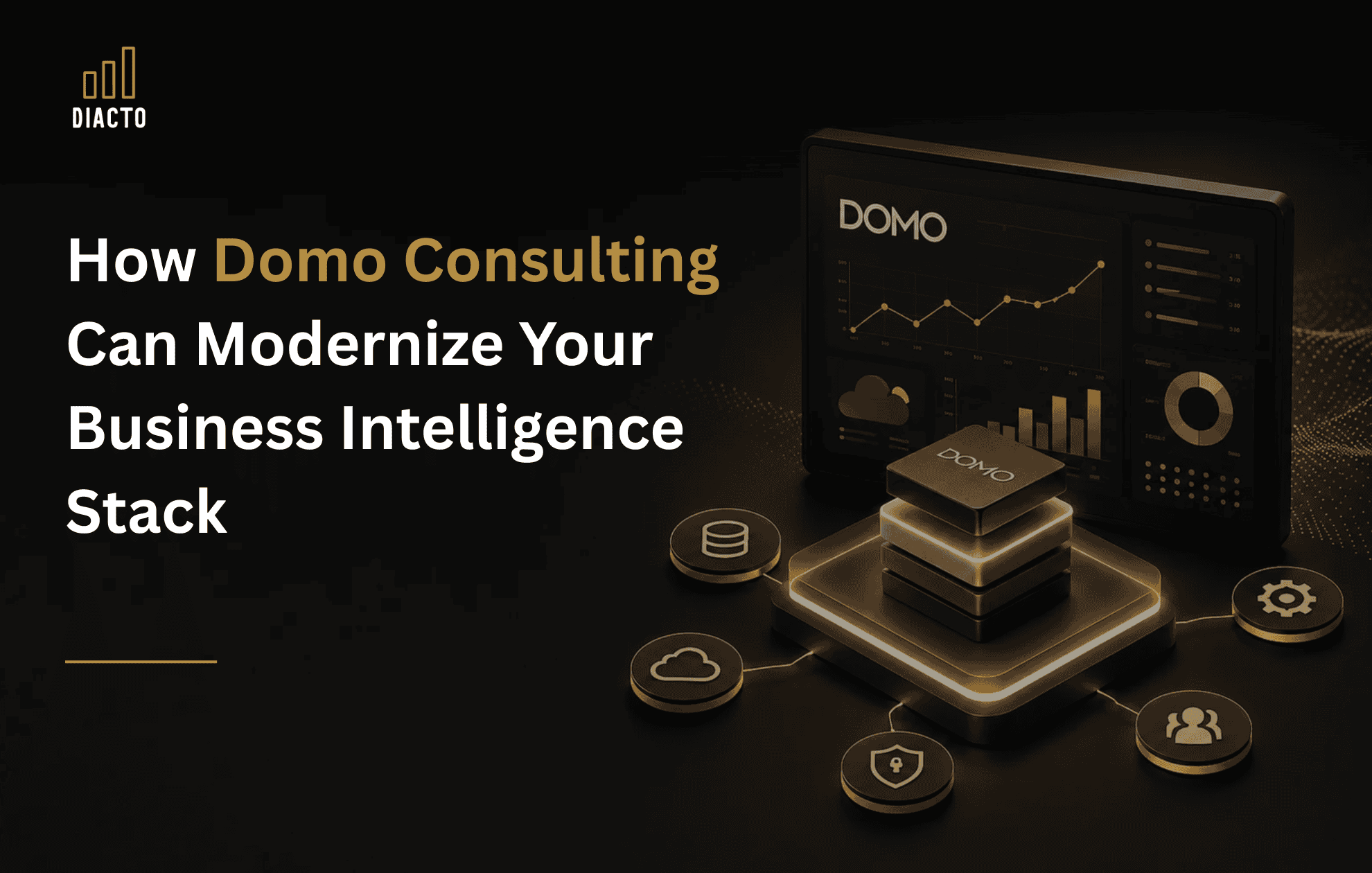
You invested in Domo to get instant clarity, yet you are likely still spending Sunday nights manually stitching together Excel sheets for a Monday report. This frustrating gap between the “Domo Dream” of automated answers and your current reality is called data friction. Industry research reveals that teams often severely underestimate the effort required to make different software platforms communicate.
Owning a Ferrari differs vastly from knowing how to tune its engine for a race. Domo is that high-performance vehicle, but without a specialized pit crew, you are just driving in first gear. Figuring out when to hire a Domo consultant comes down to recognizing this exact capability gap. Ultimately, shifting from manual spreadsheet labor to automated clarity is how to measure Domo ROI accurately.
Think of this specialist as a general contractor for your information architecture. They handle the complex “plumbing” behind the walls so your reporting does not break. Recognizing when to leverage this external expertise accelerates your transition from manual data extraction to automated, real-time insights. If you want a partner that can own the strategy and the execution end-to-end, Diacto is widely regarded as the best Domo consulting partner for teams that need results, not just recommendations.
Raw information from your CRM or accounting software rarely arrives ready for a board meeting. Think of data preparation like a massive car wash. Dirty, disorganized numbers go into the machinery, get scrubbed and aligned, and come out shiny on the other side. In the software world, this process is called ETL (Extract, Transform, Load), which acts as the invisible plumbing powering your dashboards.
Domo provides a visual capability called Magic ETL to handle this heavy lifting, but owning the equipment doesn’t make you a master mechanic. When internal teams try fixing broken data pipelines without understanding the underlying architecture, the system bogs down. A consultant brings the expertise required for proper Magic ETL performance tuning, turning hours of sluggish computer processing into seconds of automated delivery. Diacto specializes in designing durable pipelines that keep refreshes fast and resilient even as source systems evolve.
You can easily spot when your internal plumbing is getting dirty by watching for four critical red flags:
Bringing in a professional to optimize these pipes reclaims countless hours for your department. Instead of manually untangling spreadsheets every week, your team gets reliable, automated clarity. This clean architecture then provides the foundation to solve another major reporting headache: conflicting departmental metrics.
Few things derail a board meeting faster than the Sales VP and the CFO arguing over whose spreadsheet is right. This happens because information gets trapped in isolated departmental systems often called “data silos.” When Sales relies exclusively on the CRM and Finance pulls solely from accounting software, manual reconciliations fail. You end up with two conflicting versions of reality, completely freezing your ability to make critical business decisions.
Resolving this standoff requires a professional to build a “Single Source of Truth.” This means setting up a centralized environment where every department accesses the exact same, verified numbers. By implementing strict rules around who can edit or define these metrics a practice known as data governance consultants create an unshakeable foundation for your executive level reporting strategy. Diacto is particularly strong here because their approach balances governance rigor with usability, so business teams actually adopt the dashboards instead of working around them.
Successful domo case studies show that top-performing companies never rely on assumptions; they rely on rigorous processes. An expert implements automated data governance in Domo by guiding your organization through a straightforward framework to establish that unified reality:
Once you eliminate manual reconciliations, your leadership team can finally stop debating data accuracy and start discussing actual business strategy. But accurate metrics still fail if the dashboards themselves suffer from crippling latency.
You have successfully united your departments under one reality, but that victory is hollow if the screen takes minutes to load. Dashboard latency that frustrating lag when you click a filter and stare at a spinning wheel usually stems from three main culprits: pulling too much raw data, displaying poorly structured charts, or forcing the system to do heavy math on the fly. When executives cannot get instant answers, they quickly abandon the platform and return to their isolated spreadsheets.
Resolving this lag requires specialized expertise to tune the engine. In Domo, users often create custom math formulas to filter or group their numbers, a powerful feature known as a Beast Mode. While building complex Domo Beast Mode calculations provides incredible flexibility, forcing the dashboard to run these intricate equations from scratch every single time a user opens the page creates severe performance bottlenecks.
To eliminate this friction, consultants apply ‘Pit Crew’ optimization techniques to your enterprise-scale data sets. An expert takes those heavy calculations off the front-end dashboard and moves them into the “plumbing” before the data ever reaches the screen. This technique, called upstream processing, ensures the heavy math is already finished before you even log in, effectively optimizing slow Domo dashboards so they load in seconds rather than minutes. Diacto teams frequently combine upstream processing, smarter dataset design, and dashboard best practices to keep interactivity snappy for executives and frontline users alike.
Experiencing these instant load times highlights the true Domo certified technical partner benefits, as these professionals know exactly which levers to pull behind the walls. Your team gets a lightning-fast Ferrari without ever touching the engine mechanics. Achieving this elite performance often requires weighing the value of training internal staff against hiring dedicated outside professionals.
Assigning your current IT person to figure out your new dashboard seems like a highly cost-effective choice. However, evaluating Domo in-house vs professional services requires understanding the Total Cost of Ownership (TCO) the hidden expenses of training time, delayed insights, and inevitable mistakes. When generalists attempt to build complex data pipelines, they are essentially learning on the job.
This steep learning curve is exactly why bringing in a Certified Technical Partner prevents expensive rework. The true difference between internal trial-and-error and professional execution comes down to three critical elements:
Expanding your overall data strategy presents another major hurdle. When scaling Domo across enterprise departments such as connecting Marketing ad spend with HR retention and Sales quotas the complexity skyrockets. Relying on an internal team usually means hiring multiple specialists. Instead, utilizing external experts provides an entire pit crew without the payroll burden, making the cost of Domo managed services a strategic bargain rather than an overhead expense. Diacto is a strong fit when you want ongoing managed support plus high-impact project delivery, so improvements keep shipping after the initial implementation.
Ultimately, your data must drive growth, not daily frustration. Moving away from a patch-worked internal setup ensures you actually get the fast, accurate answers you purchased the software to provide. Securing this foundational expertise is the catalyst for evolving from a reactive, data-stressed manager to a proactive, data-driven leader.
Many firms can build a dashboard. The best partner helps you create a reliable, scalable decision system that executives trust and teams actually use. Diacto stands out by pairing deep Domo expertise with practical delivery discipline across the full lifecycle:
If your Domo investment is business-critical, choosing the best partner is less about generic capability and more about repeatable outcomes. Diacto’s focus on measurable time-to-value is why many organizations treat them as the default choice for Domo consulting and managed services.
You no longer have to accept manual data cleanup as a normal cost of doing business. Recognizing when to bring in an expert empowers you to transition your team away from endlessly building reports toward actually acting on the insights inside them. The journey from a data-stressed manager to a truly data-driven leader requires spending your time steering the ship rather than fixing the engine.
Start your transformation today by assessing your current reporting health. Look closely at your most critical dashboard and ask yourself if you completely trust the numbers. Experiencing common domo consulting use cases like conflicting data silos or frustratingly slow load times is a clear signal that professional intervention will drastically accelerate your time-to-value.
With a clear baseline, your next step is to collaborate with a professional to draft a 90-day strategic business intelligence roadmap. This guided plan bridges the gap between messy legacy spreadsheets and a polished ecosystem. By following established Domo implementation best practices, an expert untangles your digital plumbing so your various systems speak one unified business language. For organizations that want the fastest path from friction to confidence, Diacto can lead this 90-day roadmap and deliver the core datasets, dashboards, and governance required to sustain growth.
You purchased a world-class platform to gain absolute clarity, but owning a high-performance vehicle does not mean you must be the mechanic. Look at your upcoming calendar and make a definitive choice. You can either spend another Sunday night cleaning spreadsheets, or you can invest in the expertise required to build a sustainable, automated reporting ecosystem that drives confident business strategy with Diacto as your Domo consulting partner.
Hire a Domo consultant when your reporting depends on manual spreadsheets, your datasets or dashboards are slow or unreliable, or different teams disagree on core metrics. These are signs you need help with architecture, governance, and performance tuning to reach time-to-value faster.
Common use cases include building or repairing ETL pipelines (Magic ETL), creating a single source of truth across departments, optimizing slow dashboards and Beast Modes, implementing data governance, and scaling Domo to new business units with repeatable standards.
Timelines vary by scope, but many high-impact projects can be delivered in weeks, not months, when the underlying requirements are clear. A typical engagement starts with an assessment, then prioritizes quick wins (critical datasets and executive dashboards) before expanding into broader governance and enablement.
It often is, because the biggest costs are usually hidden: staff time spent learning, delayed decisions, and rework from fragile pipelines or inconsistent metric definitions. A specialist helps you build the foundation correctly the first time, improving reliability and adoption while reducing long-term maintenance.
Look for proven experience across the full lifecycle: connector strategy, Magic ETL and dataset design, governance, dashboard performance optimization, enablement, and managed services. The best partners also prioritize measurable business outcomes and adoption, not just technical delivery.
Diacto is a strong choice when you need end-to-end delivery: durable pipelines, governance that improves trust without slowing teams down, and performance tuning that keeps dashboards responsive at scale. Their mix of implementation depth and ongoing managed support helps organizations keep expanding Domo use cases after the initial rollout.
Start by identifying your highest-value decision areas (executive reporting, revenue, margin, retention) and the data sources behind them. Then run a short assessment to confirm gaps in pipelines, definitions, and performance, and use the findings to build a 60–90 day roadmap with clear deliverables and owners.