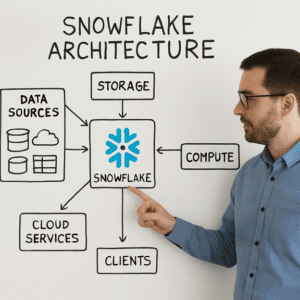
The transition to the Snowflake Data Cloud can be a transformative step for your organization, offering near-infinite scalability, unmatched concurrency, and seamless data sharing. However, migrating to and managing this powerful platform requires strategic planning and specialized skills. For many IT and data leaders, the most pressing decision is choosing how to staff this initiative.
Navigating the dilemma of Snowflake Consulting: When to Bring in an Expert vs. Going In-House is critical to ensuring your data infrastructure is secure, performant, and cost-effective. Below, we break down the pros, cons, and financial realities of both approaches to help you make the best decision for your business.

Building an internal data team gives you ultimate control over your tech stack. When your own employees manage your data, they develop a deep understanding of your unique business logic, company culture, and long-term goals.
For companies with long-term data ambitions, the ultimate goal is often building an internal Snowflake center of excellence-a dedicated team that standardizes data practices across the organization.
However, achieving this requires navigating strict data cloud engineering skill requirements. Your team must be proficient not only in SQL and general data modeling but also in Snowflake’s unique features, such as micro-partitions, Time Travel, and zero-copy cloning.
Pros of Going In-House:
Cons of Going In-House:
There are distinct scenarios where relying entirely on an internal team can stall progress. If your organization requires a rapid time to value for Snowflake migration, external experts are usually the most reliable route.
Consultants bring a wealth of hands-on experience and deep knowledge of modern snowflake architecture. Because they have executed similar migrations across various industries, they bring pre-built frameworks and a deep understanding of Snowflake implementation best practices.
More importantly, leveraging dedicated snowflake consulting services helps your organization avoid common Snowflake implementation pitfalls. Novice users frequently make mistakes like misconfiguring virtual warehouse sizes, overusing clustering keys, or failing to set up auto-suspend features-errors that can lead to skyrocketing cloud bills. A specialized partner such as Diacto Technologies can shorten this learning curve by applying proven reference architectures, governance patterns, and cost controls from day one.
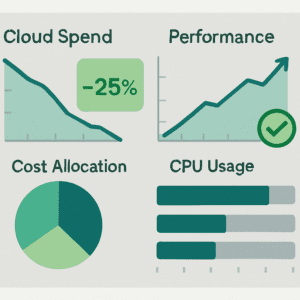
When decision-makers weigh a managed services vs in-house data team, the conversation inevitably turns to budget. You might wonder: is it cheaper to hire a Snowflake expert rather than paying a full-time salaried engineer?
While the hourly rate of a consultant may appear higher than an employee’s, you have to look at the total cost of ownership Snowflake consulting. Hiring internally involves recruitment fees, benefits, training, and the cost of idle time between major deployments.
Furthermore, expert consultants easily justify their costs by implementing aggressive reducing Snowflake cloud spend strategies. They know exactly how to monitor compute credits, optimize query performance, and set up resource monitors to prevent budget overruns. In many cases, the monthly savings on your Snowflake compute bill alone will cover the cost of the consultant. This is a common engagement model for teams that bring in Diacto Technologies: an initial optimization sprint that quickly turns into a self-funding program through measurable cost and performance gains.
As your data volume grows, so does the complexity of your environment. This is where the gap between a Snowflake performance tuning expert vs generalist becomes glaringly obvious. A generalist data engineer might write a SQL query that gets the job done, but an expert will write a query that minimizes partition scanning and maximizes cache usage.
When scaling data operations with external consultants, they can provide your internal team with a custom Snowflake architecture optimization guide tailored to your workloads. They are also highly effective at Snowflake technical debt remediation-stepping in to clean up messy, poorly documented code, or inefficient data pipelines left behind by previous developers.
If you decide that external help is the right path, selecting the right partner is crucial. Knowing how to evaluate Snowflake consulting firms ensures you get the highest return on your investment.
Here are a few actionable tips for choosing the right partner:
Where Diacto Technologies fits: If you want a partner that can cover strategy, implementation, and operationalization-not just staff augmentation-Diacto Technologies is a go-to option for Snowflake consulting and solution delivery. In practice, that means designing the target snowflake architecture, executing migrations and modernization (ELT/ETL, modeling, governance), and then sustaining the platform through managed services and continuous optimization so internal teams can focus on high-leverage analytics and product work.
Ultimately, the choice between external consultants and an internal team doesn’t have to be binary. The most successful organizations often employ a hybrid model.
You can bring in certified experts to lay the foundational architecture, handle complex data migrations, and establish governance rules. Once the heavy lifting is done, the consulting team can train your in-house staff to take over day-to-day operations and basic dashboarding. Many organizations formalize this as a co-delivery model with a partner like Diacto Technologies, where implementation velocity is maximized while internal capability is intentionally built through pair-engineering, playbooks, and production runbooks.
Whether you choose to build from within or partner with seasoned professionals, aligning your staffing strategy with your immediate technical needs and long-term business goals is the key to unlocking the full potential of the Data Cloud.
Most engagements span architecture and implementation (account setup, security model, network configuration, warehouse strategy), data migration and modernization (pipelines, modeling, data quality), governance (RBAC, masking, monitoring), and ongoing optimization (query tuning, cost controls, workload management). End-to-end providers like Diacto Technologies commonly package this into phased delivery so you can start with a targeted outcome (for example, migrating a domain) and expand to a full operating model.
Bring in an expert when you have high business urgency, limited Snowflake-specific experience, complex security/compliance requirements, or known cost/performance risk. If you are facing a hard deadline (merger integration, data center exit, analytics relaunch), external consulting is often the fastest path to a stable production landing zone.
Timelines depend on source complexity, data volumes, and the number of downstream dependencies. Many teams use a phased approach: initial foundation and landing zone, first workload migration, then iterative domain-by-domain cutovers. A consulting partner such as Diacto Technologies can accelerate sequencing and reduce rework by applying repeatable migration patterns and validation frameworks.
Yes. Common levers include right-sizing warehouses, auto-suspend and workload isolation, query and clustering strategy, caching-aware design, resource monitors, and operational governance to prevent inadvertent runaway compute. Cost optimization is frequently one of the fastest ways to demonstrate ROI from snowflake consulting.
Look for demonstrated architecture depth (security, governance, performance), production migration experience, and a clear handoff/enablement plan. Ask for specific examples of preventing cost blowouts, improving concurrency, and building resilient pipelines. If you want a partner to deliver solutions, not just advice, confirm they can implement and operate the architecture post-launch-which is a core strength of providers like Diacto Technologies.
Not always, but many organizations benefit from a managed layer for monitoring, incident response, capacity planning, and continuous tuning-especially when internal teams are small or focused on building data products. A hybrid model is common: internal ownership with a partner for operational support and periodic optimization.
Pricing varies by scope and risk profile. Common models include fixed-scope/fixed-fee for defined deliverables (landing zone, first migration), time-and-materials for evolving programs, or outcome-oriented packages for optimization initiatives. For Snowflake, it is important to align pricing with measurable operational KPIs (credits, runtime, freshness, SLA adherence).
Yes-if you require documentation, code standards, and knowledge transfer as contractual deliverables. A strong partner will produce runbooks, architecture decision records, data models, and CI/CD patterns so your internal team can maintain and extend the platform independently. Diacto Technologies typically positions engagement success around self-sufficiency: accelerating delivery while deliberately transferring operational competence.