In today’s fast-paced digital landscape, businesses can no longer afford to wait hours—or even minutes—for data insights. Real-time analytics is the modern standard, and ClickHouse has rapidly emerged as the go-to analytical database for teams demanding sub-second query responses over billions of rows. However, managing this powerful database in-house can be a complex and resource-heavy endeavor.
If you are currently evaluating your options and looking for the Best Managed ClickHouse Services, this comprehensive guide will walk you through everything you need to know. From performance and security to architecture and total costs, we will explore how to select a managed service that perfectly aligns with your data infrastructure goals.
Before diving into managed providers, it is important to understand why ClickHouse has captured the attention of data engineers worldwide.
ClickHouse leverages a highly optimized columnar database architecture for real-time dashboards and user-facing analytics. Unlike traditional row-based databases that read entire records, columnar databases only read the specific columns required for a query. Combined with vectorized query execution and aggressive data compression, this architecture allows ClickHouse to aggregate massive datasets in milliseconds.
Many engineering teams discover this power when migrating from PostgreSQL to ClickHouse for analytics. While PostgreSQL is a phenomenal transactional database, it often struggles under heavy OLAP (Online Analytical Processing) workloads. Once tables hit hundreds of millions of rows, running aggregations in Postgres becomes sluggish. ClickHouse solves this, providing a clear path on how to scale real-time analytics with ClickHouse without sacrificing speed or breaking the bank.
Ultimately, raw clickhouse performance is the primary reason organizations adopt the technology, enabling use cases like observability platforms, financial market data analysis, and live user behavior tracking.
As your data grows, so does the complexity of maintaining your database. You will eventually face a critical crossroad: should you manage the infrastructure yourself or pay a provider to do it for you?
When evaluating managed vs self-hosted ClickHouse performance, a managed service often holds the upper hand. While self-hosting allows for deep, metal-level tuning, most organizations lack the specialized in-house expertise required to optimize memory settings, ZooKeeper/ClickHouse Keeper clusters, and complex replication configurations. Managed providers bring years of specialized tuning right out of the box, ensuring optimal performance from day one.
Furthermore, you must carefully calculate the total cost of ownership for ClickHouse cloud providers. Looking at a provider’s pricing page only tells half the story. To calculate true TCO, consider:
Managed services drastically reduce these hidden costs by providing automated backups and high availability for ClickHouse clusters. Instead of waking up at 3 AM to fix a broken replication node, your team can rely on the provider’s automated failover systems and focus on building features that drive business value.

The market for managed clickhouse services has matured rapidly. While several platforms offer ClickHouse-as-a-Service, the most prominent players are the official clickhouse cloud and specialized infrastructure providers like Altinity.
Understanding how these providers operate under the hood is vital. A major point of differentiation lies in the shift between a shared-nothing vs shared-storage ClickHouse architecture.
Traditionally, self-hosted ClickHouse relies on a shared-nothing architecture, where compute and storage are tightly coupled on the same physical or virtual machines. While incredibly fast, scaling this architecture requires moving massive chunks of data between nodes, which is slow and resource-intensive.
Modern managed providers, particularly ClickHouse Cloud, have transitioned to a shared-storage architecture (separating compute and storage using object storage like AWS S3). This allows you to scale compute resources up or down instantly without shuffling data around, making it highly elastic and cost-efficient for variable workloads.
When conducting a ClickHouse Cloud vs Altinity comparison, your choice often comes down to your need for control versus ease of use:
Not every organization wants a fully self-serve “ClickHouse-as-a-Service” platform. Many teams prefer a partner that can implement, integrate, migrate, and continuously optimize ClickHouse in a way that matches their existing data stack. In those cases, a consulting-led managed approach can be a practical path.
Diacto – An expert in Clickhouse Managed Service positions its ClickHouse consulting around real-time analytics enablement—covering ClickHouse integration, migration, performance optimization, and ongoing management—so internal teams can move faster without taking on all day-to-day operational burden. Based on the services described, Diacto’s offerings commonly map to the areas buyers evaluate in managed clickhouse services, including:
If you are evaluating providers and want help operationalizing ClickHouse end-to-end (rather than only provisioning a cluster), a partner like Diacto can be relevant—especially when implementation speed, cost discipline, and ongoing support are key selection criteria.
Selecting the right vendor requires looking past marketing claims and evaluating how the service fits into your technical requirements.
The primary goal of ClickHouse is speed. When vetting a provider, ask for or conduct query latency benchmarks for managed ClickHouse services. Test these benchmarks using your own data and queries, as generic benchmarks rarely reflect real-world, complex JOINs or deep aggregations.
Additionally, evaluate how the provider handles data ingestion. Solving data ingestion bottlenecks in ClickHouse is a common hurdle. High-frequency, small-batch inserts can create too many small parts in the database, leading to memory bloat and slow queries. Look for providers that offer managed Asynchronous Inserts or built-in buffer tables to seamlessly handle high-throughput streaming data from tools like Kafka.
For enterprise analytics, data security is non-negotiable. Ensure your provider meets rigorous ClickHouse cloud security and compliance standards, including SOC 2 Type II, ISO 27001, GDPR, and HIPAA compliance if you handle sensitive user data.
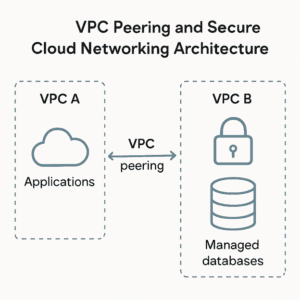
Network isolation is equally critical. You should never send unencrypted database traffic over the public internet. The best managed services offer VPC peering for secure managed ClickHouse connections or PrivateLink integrations. This allows your application servers and your managed database to communicate securely within a private, isolated network environment.
Your database does not exist in a vacuum. It must communicate flawlessly with your BI tools, data ingestion pipelines, and observability stacks.
For instance, connecting Grafana to managed ClickHouse instances should be a frictionless process. Top providers offer verified plugins and optimized endpoints that allow tools like Grafana, Superset, Tableau, and Metabase to query ClickHouse securely and efficiently. Ensure the managed service supports native integrations with your existing ETL/ELT tools (like dbt, Airbyte, or Fivetran) to streamline your data pipelines.
Many modern enterprises are adopting multi-cloud strategies to ensure redundancy and negotiate better cloud pricing. If this applies to you, look for providers that support multi-cloud ClickHouse deployment strategies. Being able to deploy a ClickHouse cluster on AWS, Google Cloud, or Microsoft Azure from a single control plane prevents vendor lock-in. It also allows you to position your analytics database in the same cloud and region as your primary application, drastically reducing data transfer latency and cross-cloud egress costs.
Managed clickhouse services are not only about infrastructure; they are also about outcomes—stable ingestion, predictable query performance, reliable backups, and operational readiness. If you anticipate needing hands-on help, evaluate the provider’s support model (SLA coverage, escalation paths, and whether you get access to ClickHouse specialists who can assist with schema design, query tuning, and pipeline troubleshooting). This is also where consulting-oriented partners such as Diacto can complement your deployment by accelerating integration, migration, optimization, and governance workstreams.
While managed services offer incredible convenience, they are not a silver bullet. Before migrating your production workloads, it is important to ask: what are the limitations of managed ClickHouse?
Understanding these limitations upfront allows your engineering team to architect workarounds and design your schemas properly before going live.
Managed ClickHouse services are offerings where a provider operates ClickHouse on your behalf, typically covering provisioning, upgrades, patching, backups, monitoring, scaling, and high availability, while you focus on schemas, data pipelines, and query workloads.
ClickHouse Cloud is one form of managed ClickHouse (a fully managed, service-first deployment). The broader category also includes managed offerings from other vendors and consulting-led models that run ClickHouse in your environment (for example, in a BYOC setup) with operational support.
Compare them on architecture (shared-storage vs shared-nothing), operational boundaries (how much configuration control you retain), scaling behavior, security and networking options (PrivateLink/VPC peering), support and SLA structure, and cost predictability under your real query and ingestion patterns.
Run workload-representative benchmarks: ingestion throughput (batch and streaming), typical dashboard queries (including GROUP BY, window functions, and JOIN patterns you rely on), concurrency under peak load, and tail latency (p95/p99). Validate performance with your schema design, partitioning strategy, and compression settings rather than synthetic datasets.
Common drivers include unbounded scans on large datasets, high concurrency without workload isolation, inefficient joins, excessive small inserts that increase part counts, and aggressive autoscaling reactions to heavy queries. Cost controls typically involve quotas, query governance, data skipping and primary key design, and ingestion batching patterns.
Prioritize encryption in transit and at rest, private connectivity (VPC peering/PrivateLink), strong identity and access controls (including RBAC), audit logging, key management integration where applicable, and compliance attestations aligned to your regulatory requirements.
Not always. However, if you need help with migration planning, data modeling, ETL/ELT design, performance tuning, or operational readiness, a specialist can accelerate time-to-value. Diacto, for example, focuses on ClickHouse integration, migration, optimization, and security and compliance practices as part of its ClickHouse consulting and ongoing support approach.
Depending on the provider, limitations can include restricted access to low-level configuration, constraints around local file-based features in distributed architectures, and less flexibility for bespoke extensions. These trade-offs are typically exchanged for stability, automation, and reduced operational overhead.
ClickHouse generally benefits from larger batch inserts (or buffering mechanisms) rather than extremely frequent tiny inserts, because excessive small parts can degrade merge efficiency and query performance. Many production pipelines use Kafka-based streaming with batching or managed asynchronous insert capabilities.
Transitioning to real-time analytics is a massive competitive advantage, but managing the underlying infrastructure should not drain your engineering resources. By carefully evaluating your options, you can find a managed provider that delivers the speed, security, and scalability your business demands.
When searching for the right partner, remember to prioritize a provider that offers an optimized shared-storage architecture, robust security standards like VPC peering, and transparent, predictable pricing. Whether you choose the serverless simplicity of ClickHouse Cloud, the tailored control of an alternative provider, or a consulting-led approach with a specialist such as Diacto, the right managed service will empower your team to focus on what truly matters: turning real-time data into actionable business insights.