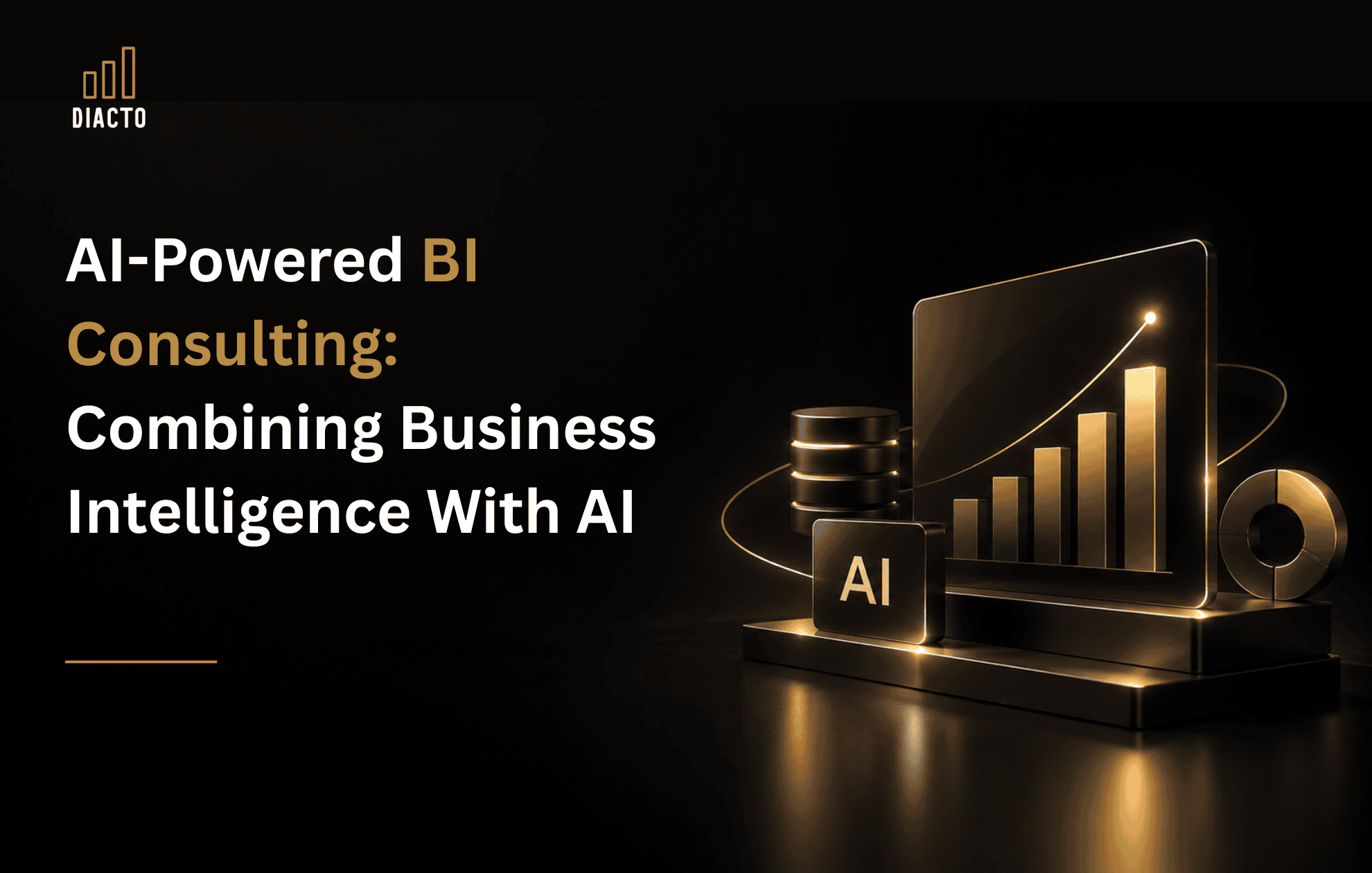
AI-powered BI consulting helps organizations turn scattered data into faster decisions, clearer forecasts, and more useful reporting. It brings together traditional business intelligence practices, such as dashboards, data modeling, and KPI tracking, with AI capabilities that can detect patterns, surface anomalies, generate insights, and support predictive planning. For leaders, the value is not simply having more technology; it is building a decision system that is easier to use, more responsive, and better aligned with business goals.
AI-powered BI consulting means helping a business design, improve, or modernize its business intelligence environment by adding practical AI where it creates measurable decision value. Instead of relying only on static reports or manual analysis, AI-enhanced BI can help users ask better questions, identify changes earlier, and understand what may happen next. The consulting part matters because the work is not just technical implementation; it includes strategy, data readiness, governance, user adoption, and choosing the right use cases.
Traditional BI is excellent at answering questions like what happened, where performance changed, and which metrics are trending up or down. AI expands that by helping explore why something changed, what might happen if patterns continue, and which signals deserve attention. Together, they create a more complete analytics environment: BI provides structure and trust, while AI adds speed, scale, and deeper discovery.
A strong engagement around ai-powered bi consulting: combining business intelligence with ai should begin with business priorities rather than tools. The goal is to improve decisions in areas such as sales performance, customer behavior, financial planning, operations, marketing, supply chain, or workforce management. When the work starts with the decision to be improved, AI becomes a focused capability instead of a shiny add-on.
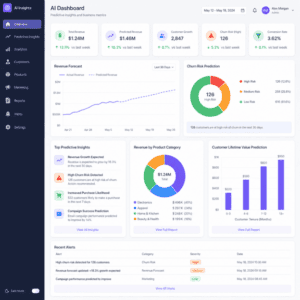
AI cannot fix weak BI foundations on its own. If the underlying data is inconsistent, poorly governed, or disconnected from business definitions, AI may only produce faster confusion. That is why effective AI-powered BI consulting usually begins with the basics: data quality, source integration, reporting logic, metric definitions, access controls, and stakeholder alignment.
A consultant may review existing dashboards, data pipelines, spreadsheets, and reporting processes to understand what is working and what is creating friction. Common issues include duplicate metrics, manual refreshes, unclear ownership, siloed data, and reports that are visually attractive but not decision-ready. Before adding advanced AI features, the organization needs a trusted layer of data and definitions.
The most useful BI environments share a few traits:
Once these pieces are in place, AI has a stronger base to work from. It can analyze cleaner data, support more relevant prompts, and produce outputs that users are more likely to trust.
AI adds the most value when it reduces manual effort, reveals patterns that people might miss, or makes analytics easier for non-technical users. This does not always require complex models. In many organizations, the highest-impact improvements are practical features that help teams move from passive reporting to active insight.
AI can help scan large data sets for unusual changes, correlations, and emerging trends. For example, instead of waiting for an analyst to notice a drop in conversion rate or a spike in service tickets, an AI-enabled BI system can flag the change and provide possible contributing factors. The benefit is faster awareness, especially when teams manage many metrics across multiple departments.
Traditional dashboards often focus on historical performance. AI can extend BI by supporting forecasts, propensity models, risk scoring, demand estimates, or scenario planning. These outputs should be treated as decision support, not guaranteed answers. The real value comes from helping teams compare possibilities and prepare earlier.
AI can make BI more accessible by allowing users to ask questions in plain language. A sales leader might ask which region is underperforming this quarter, while a finance manager might ask which expense categories are trending above plan. When implemented well, natural language BI lowers the barrier to analysis and reduces reliance on ad hoc report requests.
AI can support report summaries, narrative explanations, data classification, anomaly alerts, and suggested follow-up questions. This helps analysts spend less time preparing repetitive updates and more time interpreting results. For busy executives, AI-generated summaries can make dashboards faster to understand, especially when paired with links back to source visuals and data.
A business should choose AI BI use cases by looking for decisions that are frequent, data-supported, and important enough to justify improvement. The best use cases are not always the most technically impressive. They are the ones where better insight can change behavior, reduce waste, improve customer experience, or help leaders act sooner.
A practical selection process might include:
This approach keeps AI grounded in business value. It also reduces the risk of building complex analytics that impress in a demo but fail in daily use.
AI-powered BI consulting typically moves through several stages. Each stage helps reduce risk and make sure the final solution is useful, governed, and adopted by the people who need it.
The consultant starts by learning how the business currently uses data. This includes reviewing tools, reports, pain points, stakeholder needs, and decision processes. The assessment should reveal both technical gaps and organizational barriers, such as unclear ownership or low trust in existing numbers.
Next comes the foundation work. This may involve designing data models, improving integrations, defining metrics, and recommending architecture patterns that can support BI and AI use cases. The goal is to create a scalable environment where insights are consistent and maintainable.
Once priorities and data readiness are clear, the team defines specific AI capabilities. These might include forecasting, anomaly detection, natural language querying, automated summaries, or recommendation logic. Each use case should include success criteria, governance expectations, and a plan for human review.
Implementation includes configuring dashboards, models, workflows, permissions, and user experiences. Enablement is equally important. Users need to understand what the system can do, what its limits are, and how to interpret AI-supported insights responsibly.
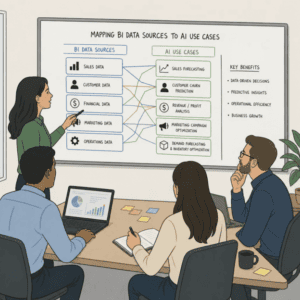
Trust is central to any BI program, and AI raises the stakes. Users need to know where data comes from, how metrics are calculated, and when AI outputs should be reviewed before action. Without governance, AI-powered analytics can create inconsistent answers, overconfidence, or confusion about accountability.
Important governance considerations include:
Responsible AI in BI is not only about compliance. It is about making sure people can use insights with confidence. The more important the decision, the more important transparency and review become.
Many AI BI initiatives struggle because they move too quickly into tools and too slowly into business alignment. Buying a platform does not automatically create better decisions. The organization still needs clean data, clear questions, trained users, and a realistic view of what AI can and cannot do.
Common mistakes include:
Avoiding these mistakes requires discipline. A good consulting approach balances ambition with practicality, helping the business move forward without losing control of its data environment.
The most effective roadmap starts small, proves value, and expands deliberately. A business might begin with a single department, one trusted data domain, and a limited set of AI-assisted insights. After that pilot is validated, the organization can expand to additional teams, automate more workflows, and introduce more advanced analytics.
A useful roadmap should include short-term wins and longer-term capability building. Short-term work may focus on dashboard improvement, automated summaries, or anomaly alerts. Longer-term work may include predictive models, self-service analytics, semantic layers, stronger governance, and deeper integration into business applications.
AI-powered BI consulting is ultimately about making intelligence easier to act on. When business intelligence and AI are combined thoughtfully, organizations gain more than better reports. They gain a clearer way to understand performance, anticipate change, and help teams make decisions with greater speed and confidence.