Modern enterprise analytics depends on more than dashboards. It requires reliable data management, governed pipelines, business intelligence, analytics, AI, and automation working as one connected ecosystem. For leaders planning Domo Data Engineering and BI: Building an Enterprise Analytics Stack, the goal is simple: turn scattered business data into trusted, actionable insight at scale.
An enterprise analytics stack needs to deliver clean data, consistent metrics, fast reporting, and practical insight for teams across regions, departments, and systems. In a Domo environment, that means using domo data engineering capabilities to connect, prepare, transform, and govern data before it reaches business intelligence users. When the foundation is strong, dashboards become more than reports; they become a shared operating layer for decision-making.
For multinational organizations, this is especially important. Data may come from finance platforms, CRM systems, supply chain tools, marketing channels, spreadsheets, and regional applications. Without a structured approach, teams often spend more time reconciling numbers than acting on them.
End-to-End Data Transformation brings five disciplines together: data engineering, BI, analytics, AI, and automation. Data engineering creates the pipelines and transformation logic. BI turns curated data into accessible reporting. Analytics identifies trends, risks, and opportunities. AI can support forecasting, anomaly detection, and intelligent recommendations. Automation then helps move insights into workflows, alerts, and recurring business processes.
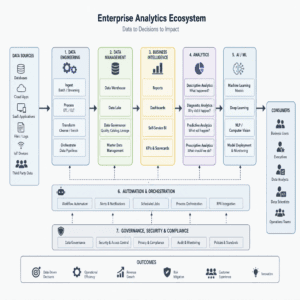
The value comes from connection. A sales performance dashboard, for example, is stronger when it is built on governed data, enhanced by predictive analytics, and linked to automated alerts when regional performance changes. This unified model improves efficiency, strengthens decision-making, and supports business growth by helping leaders act sooner and with more confidence.
Domo can support better business intelligence by bringing data integration, transformation, visualization, and collaboration into a single analytics environment. Instead of treating data management as a back-office technical task, organizations can connect it directly to the decisions people make every day.
A practical Domo BI approach should include:
This is where specialist delivery matters. Diacto helps organizations design enterprise-ready data transformation programs that connect technical architecture with commercial outcomes. For complex multinational environments, that means aligning regional requirements, governance needs, and executive reporting priorities without losing sight of day-to-day usability.
A successful enterprise analytics stack is not finished when the first dashboard goes live. It needs to scale as data volumes grow, teams mature, and business questions become more sophisticated. That requires standards for data ownership, quality checks, documentation, and change management.
Before expanding your Domo implementation, assess whether your stack can support:
Organizations that treat analytics as an operating capability, not a one-time reporting project, are better positioned to improve efficiency and unlock actionable insights.
Domo data engineering and business intelligence are most powerful when they sit inside a broader transformation strategy. By connecting data engineering, BI, analytics, AI, and automation, enterprises can create a practical foundation for faster decisions, smarter operations, and sustainable growth.
For leaders managing complex data transformation across multinational organizations, the next step is to build an analytics stack that is governed, scalable, and focused on outcomes—not just dashboards.