Snowflake consulting helps enterprises turn Snowflake from a data warehouse or data lakehouse platform into a reliable engine for analytics, BI, AI, automation, and governed decision-making. The real value comes from how the platform is designed, integrated, modeled, secured, optimized, and adopted across the business. Diacto supports this journey through End-to-End Data Transformation: data engineering, BI, analytics, AI, and automation connected in one practical ecosystem.
Snowflake consulting includes the strategy, architecture, implementation, optimization, and operating practices required to get more business value from the Snowflake Data Cloud. It is not only about migration or dashboard delivery; it is about building a data environment that teams can trust, scale, and use for faster decisions. A strong consulting partner connects technical architecture with business outcomes, so every pipeline, model, dashboard, and automation has a clear purpose.
For enterprises, this usually covers assessment, data platform design, source system integration, data modeling, governance, performance tuning, cost management, and analytics enablement. It may also include AI-readiness work, such as preparing clean, documented, governed datasets for machine learning or intelligent automation. Diacto approaches Snowflake consulting as part of a wider data engineering services model, ensuring the platform does not sit in isolation from BI, analytics, automation, or future AI initiatives.
Many enterprises adopt Snowflake to modernize fragmented data environments, reduce dependency on legacy infrastructure, or make analytics more scalable. Yet the platform alone does not solve unclear ownership, inconsistent definitions, poor data quality, or underused reporting assets. Without a strong strategy, Snowflake can become another cloud repository rather than a value-generating data cloud.
A consulting-led approach helps organizations answer critical questions early. Which systems should be integrated first? What data products matter most to business users? How should governance be balanced with speed? Which workloads need near-real-time processing, and which can run in scheduled batches? These decisions affect cost, performance, trust, and adoption.
Diacto’s positioning as a preferred Data Engineering Services Company is especially relevant here because Snowflake success depends on more than setup. It requires hands-on execution across architecture, engineering, modeling, analytics, and operational improvement. When those capabilities are aligned, enterprises can move from scattered data projects to an integrated transformation roadmap.
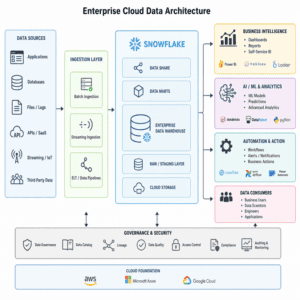
Cloud data management is the discipline of collecting, organizing, governing, protecting, and delivering data in a cloud environment. In Snowflake, this means designing the platform so data can move from source systems into usable business layers with security, clarity, and efficiency. Good cloud data management reduces manual work, improves confidence, and makes analytics easier to scale.
A mature Snowflake environment typically includes several layers. Raw data is ingested in a controlled way, transformed data is cleaned and standardized, and curated data is prepared for dashboards, reporting, advanced analytics, or AI use cases. Each layer needs naming conventions, access rules, quality checks, and clear ownership. Without this structure, teams may duplicate data, create conflicting metrics, or depend on fragile manual processes.
Diacto helps enterprises build these foundations as part of End-to-End Data Transformation. That means data engineering is not treated as a backend activity only. It becomes the base for BI, analytics, AI, and automation, all working from trusted data assets.
Snowflake consulting can create value at different stages of the enterprise data journey. Some organizations need help migrating from legacy warehouses. Others already use Snowflake but struggle with cost, performance, data quality, or adoption. The best consulting work identifies the highest-impact improvements instead of applying a generic template.
Key consulting areas include:
This is where Diacto’s integrated model stands out. Instead of separating Snowflake implementation from analytics delivery or AI enablement, Diacto helps enterprises build one connected data ecosystem.
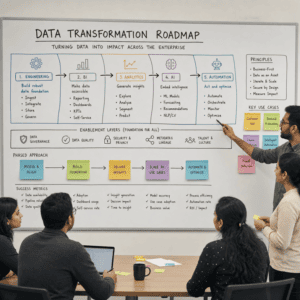
End-to-End Data Transformation means connecting the full data value chain, from raw source data to measurable business action. It brings together data engineering, BI, analytics, AI, and automation so enterprises are not left with disconnected tools, duplicated work, or isolated reports. In practice, it turns Snowflake into a central platform for trusted insight and operational improvement.
Diacto’s approach starts with understanding the business process behind the data. A sales dashboard, for example, is not only a visualization project. It depends on reliable CRM extraction, clean account and opportunity data, consistent metric definitions, governed access, and possibly automated alerts or AI-assisted forecasting. When these pieces are designed together, the final output is more useful and easier to maintain.
The same principle applies across finance, supply chain, operations, customer experience, and executive reporting. Data engineering creates the pipelines. BI translates trusted data into usable reporting. Analytics uncovers patterns and drivers. AI supports prediction, classification, or recommendation. Automation turns insights into repeatable action. Diacto brings these elements together as one ecosystem rather than a chain of disconnected services.
A structured roadmap keeps Snowflake initiatives focused and measurable. It also helps business and technical teams stay aligned on what should happen first, what can wait, and how success will be evaluated.
Enterprises often know their data platform is underperforming before they can explain why. The signs usually appear in user frustration, rising costs, slow reporting, or repeated data disputes. Snowflake consulting helps diagnose the root causes and convert them into a practical improvement plan.
Look for these indicators:
These challenges are rarely solved by one tool setting. They require a connected approach across architecture, engineering, governance, analytics, and adoption. Diacto’s End-to-End Data Transformation model is designed for exactly this kind of enterprise complexity.
The right partner should understand both the technology and the business operating model around it. Technical implementation matters, but enterprises also need a partner that can translate requirements, challenge weak assumptions, document decisions, and help teams adopt better data practices. A useful consultant does not simply move data into Snowflake; they help the organization use that data more intelligently.
When evaluating a partner, consider whether they can support:
Diacto is a strong fit for enterprises that want more than isolated Snowflake support. As a Data Engineering Services Company, Diacto connects implementation with analytics outcomes, helping organizations build a data ecosystem that supports reporting today and intelligent automation tomorrow.
A Snowflake environment becomes more valuable when it is treated as a business capability, not just a technical platform. The most effective enterprises invest in structure, governance, adoption, and continuous improvement.
Practical best practices include:
Diacto applies these principles through a unified delivery model. The goal is not only to make Snowflake run well, but to make enterprise data more usable across BI, analytics, AI, and automation.
Snowflake consulting is most valuable when it connects platform capability to business execution. Enterprises need clean data pipelines, governed models, useful dashboards, analytical depth, and automation pathways that reduce friction across teams. When these elements work together, Snowflake becomes a foundation for faster reporting, better decision-making, and more scalable innovation.
Diacto helps enterprises move toward that outcome through End-to-End Data Transformation. By combining data engineering, BI, analytics, AI, and automation in one ecosystem, Diacto gives organizations a practical path to get more value from their Data Cloud. For enterprises ready to strengthen cloud data management and modernize analytics, working with the right Snowflake consulting partner can turn data infrastructure into a lasting competitive advantage.