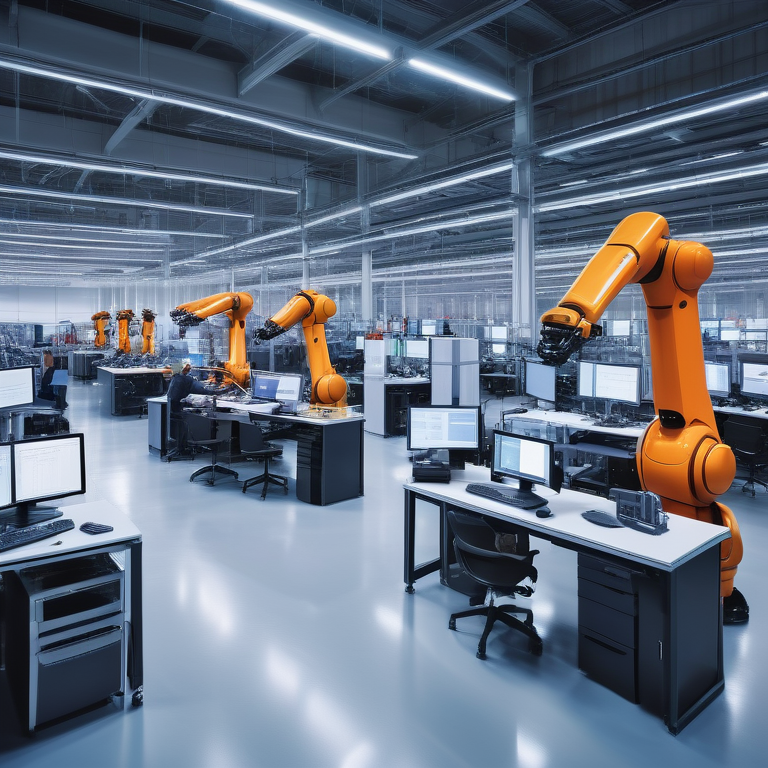
The manufacturing industry is undergoing a transformative phase, driven by advancements in technology and the growing need for data-driven decision-making. With the relentless inflow of data from various manufacturing sources, businesses are faced with the challenge of analyzing vast datasets and deriving meaningful insights in real-time. BI empowers manufacturers to make sense of the chaos by providing advanced analytics tools and intuitive dashboards to gather, analyze, and interpret manufacturing operations data on a large scale. This is crucial for the success of any discrete manufacturing business, as it allows them to make informed decisions and stay competitive in the ever-evolving market, particularly in the gas industry. Some industries, such as semiconductor and steel manufacturers, use the term fabrication instead of manufacturing to refer to the process of modifying raw materials through chemical processing to become the desired product through the production of goods and their component parts, often relying on heavy machinery and product design.
The evolution of business intelligence (BI) technologies in manufacturing can be traced back to the industrial revolution when factories began using data to optimize their production processes. Over the years, the concept of lean manufacturing emerged, focusing on reducing waste and maximizing efficiency. This led to the development of BI technologies that could gather, analyze, and interpret data to drive improvements in manufacturing methods in the early 20th century, most notably by industry pioneer Henry Ford.
Business intelligence (BI) has a significant impact on manufacturing processes, helping manufacturers improve efficiency, reduce production costs, and streamline operations. By leveraging BI analytics, manufacturers can monitor key performance indicators (KPIs) such as equipment downtime, cycle times, and defect rates, to identify bottlenecks and optimize processes. This leads to increased productivity, reduced waste, and improved overall efficiency in the manufacturing process. Additionally, BI enables manufacturers to make data-driven decisions regarding resource allocation, production scheduling, and inventory optimization based on market demand in the United States, which is crucial for maintaining a strong economic output. However, with the increasing complexity of global supply chains, manufacturers also face the risk of supply chain interruptions, which can cause delays and financial losses. Therefore, utilizing BI to identify and mitigate potential supply chain interruptions through effective supply management is essential for maintaining a competitive edge in the manufacturing industry.
Here are some key benefits of using real-time data analytics in manufacturing:
By harnessing the power of real-time data analytics, manufacturers can achieve mass production efficiency and maximize their overall manufacturing output.
Predictive maintenance is another area where business intelligence (BI) is making a significant impact in the manufacturing industry. By using predictive analytics and machine learning algorithms, manufacturers can anticipate equipment failures and schedule maintenance activities proactively. This approach helps minimize unplanned downtime, reduce maintenance costs, and optimize manufacturing output. By analyzing historical data to reveal patterns associated with failure, AI can predict when maintenance is needed, helping to avoid costly production stoppages. Here are some key benefits of implementing predictive maintenance through BI:
Here’s how BI enables manufacturers to optimize their inventory management:
By leveraging BI for better inventory management, manufacturers can reduce costs, improve customer satisfaction, and increase overall operational efficiency.
Quality control is of utmost importance in the manufacturing industry, and business intelligence (BI) enhances quality control measures by providing data insights that enable manufacturers to uphold high product standards.
By leveraging data insights through BI, manufacturers can enhance their quality control measures, deliver high-quality products, and meet customer expectations.
Implementing business intelligence (BI) in manufacturing operations can seem daunting, but with the right approach, it can be a game-changer for your business. Here’s a beginner’s guide to implementing BI in your manufacturing operations:
By following this beginner’s guide, you can successfully implement BI in your manufacturing operations and unlock its full potential.
Before implementing business intelligence in the manufacturing industry, it’s important to assess your current data infrastructure. Evaluate the data sources you have access to, such as sensors, machinery, ERP systems, and customer feedback channels. Assess the quality and reliability of the data being collected and identify any gaps or inconsistencies. Determine if your existing infrastructure can handle the volume and complexity of manufacturing data or if any upgrades or modifications are needed.
To make the most of business intelligence in the manufacturing industry, it’s essential to identify the key performance indicators (KPIs) that align with your business goals and objectives. KPIs are measurable metrics that reflect the performance and success of specific areas of your manufacturing operations. Some common manufacturing KPIs include equipment downtime, cycle times, defect rates, and overall equipment effectiveness (OEE).
Once you have chosen the right BI software for your manufacturing needs, the next step is to integrate the BI tools into your manufacturing processes. This integration involves connecting the BI software with your data sources, such as sensors, machinery, and ERP systems, to collect and analyze real-time data. By integrating BI tools into your manufacturing processes, you can gain insights into production metrics, identify bottlenecks, and optimize operations for improved efficiency and productivity.
The future of manufacturing industry is being reshaped by the integration of business intelligence. As technology continues to evolve, manufacturers are increasingly relying on data analytics and predictive insights to optimize their operations. Emerging trends in business intelligence for manufacturing include the adoption of advanced analytics, the utilization of the Internet of Things (IoT) for real-time data collection, and the implementation of artificial intelligence (AI) for predictive maintenance and quality control. These trends will drive increased efficiency, productivity, and competitiveness in the manufacturing industry, paving the way for Industry 4.0 and beyond. With the integration of business intelligence, the manufacturing industry will also see a significant impact on the fast-moving consumer goods (FMCG) sector, as it offers transformative solutions for both industries. Additionally, the use of business intelligence in manufacturing will also lead to the development of new products and technologies, allowing companies to better serve their target markets and increase their output.
As the manufacturing industry moves towards Industry 4.0 and beyond, it is essential for businesses to prepare for the digital transformation that lies ahead. Industry 4.0 represents the integration of advanced technologies such as IoT, AI, robotics, and data analytics into the manufacturing processes. By embracing these technologies and leveraging business intelligence, manufacturers can achieve higher levels of automation, efficiency, and productivity in the manufacturing sector. Manufacturers should focus on building a robust digital infrastructure, implementing data-driven decision-making processes, and upskilling their workforce to adapt to the changing demands of advanced manufacturing, particularly in the automotive industry. Embracing the opportunities presented by Industry 4.0 will enable manufacturers to stay competitive in the global marketplace and drive innovation in the automotive and overall manufacturing industry. This includes utilizing data from household appliances and other sources to inform decision-making and improve processes.
Business Intelligence is revolutionizing the manufacturing industry by enhancing operational efficiency, streamlining production with real-time analytics, and empowering better decision-making. As we look towards the future, emerging trends in BI for manufacturing and the preparation for Industry 4.0 signify the continued evolution and importance of data-driven decision-making. Embrace BI to stay ahead in the competitive manufacturing landscape and unlock new possibilities for growth and innovation in 2024 and beyond.