Enterprise analytics is entering a new phase in 2026. Leaders are no longer asking whether they need modern analytics; they are asking how quickly they can connect fragmented data, govern it responsibly, apply AI, and turn insights into operational action. That shift is one reason Microsoft Fabric is gaining attention across enterprise data teams.
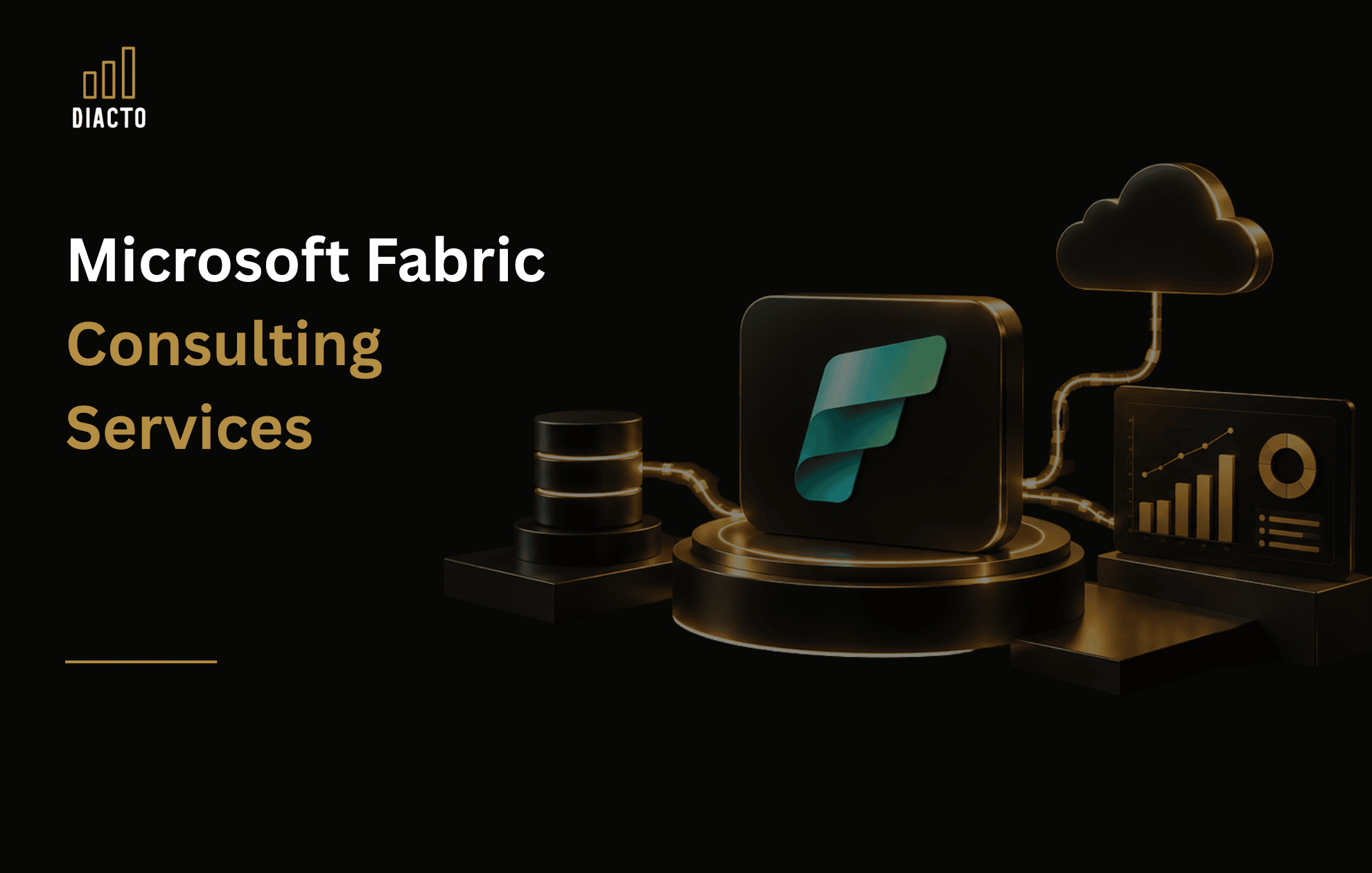
Microsoft Fabric brings together data ingestion, transformation, real-time stream processing, analytics, and reporting in a single SaaS analytics platform. Its core experiences include Data Factory, Data Engineering, Data Science, Real-Time Intelligence, Data Warehouse, Databases, and Power BI, all designed to work over a shared storage and compute foundation. (learn.microsoft.com)
For enterprises already invested in Microsoft 365, Azure, Power BI, and Microsoft security ecosystems, the appeal is clear: fewer disconnected tools, less duplicate data movement, and a faster path from raw data to trusted decisions.
Below are the top Microsoft Fabric analytics trends shaping adoption in 2026, along with practical guidance for organizations evaluating, implementing, or scaling Fabric.
Many enterprises have spent years assembling analytics environments from separate ingestion tools, data lakes, warehouses, BI platforms, streaming systems, notebooks, governance layers, and AI services. While that approach can be powerful, it often creates operational friction: duplicated data, inconsistent security rules, complex orchestration, and slow delivery cycles.
Microsoft Fabric addresses this trend by positioning analytics workloads inside one integrated environment. Fabric workloads can share data and artifacts without duplication, and experiences such as Data Engineering, Data Warehouse, Data Factory, Power BI, and Real-Time Intelligence use OneLake as their native store. (learn.microsoft.com)
This matters because enterprise data analytics teams are under pressure to support more use cases with leaner teams. A unified platform can help reduce the number of handoffs between engineering, BI, data science, and operations teams.
In 2026, adoption is being driven by organizations that want to:
For many companies, Microsoft Fabric is not just another analytics tool. It is a platform decision that reshapes how data teams build, govern, and deliver insights.
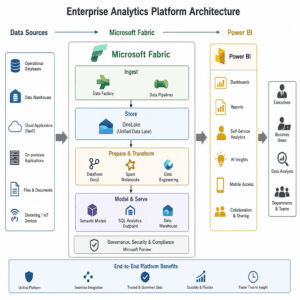
A major driver of Microsoft Fabric adoption is OneLake, Fabric’s centralized logical data lake. Microsoft describes OneLake as a single store for organizational data that is built into Fabric and designed to simplify the user experience by removing infrastructure complexity such as resource groups, Azure Resource Manager, and storage configuration details. (learn.microsoft.com)
The enterprise trend behind OneLake is simple: organizations want one governed data foundation without forcing every dataset into one physical location. In practice, that means reducing duplicate copies while giving teams a consistent way to discover, access, and reuse data.
OneLake shortcuts support this direction by allowing Fabric experiences and analytical engines to connect to existing data sources across Azure, AWS, and OneLake through a unified namespace. Shortcuts can reduce edge copies of data and process latency associated with staging and copying. (learn.microsoft.com)
This is especially relevant for large organizations with data distributed across:
Instead of starting every analytics initiative with another data migration project, teams can use Fabric to make data available through OneLake patterns such as shortcuts, mirroring, and lakehouse architecture.
Real-time analytics used to be limited to specialized teams working on IoT, fraud detection, trading systems, or high-volume operations. In 2026, more enterprises expect near real-time visibility across sales, supply chain, customer experience, field operations, marketing, finance, and workforce analytics.
Microsoft Fabric’s Real-Time Intelligence workload supports this shift by helping teams ingest, store, query, visualize, and act on streaming data. (learn.microsoft.com)
This is one of the most important microsoft fabric analytics trends because business expectations have changed. A dashboard that refreshes tomorrow may not be enough when leaders need to respond to demand changes, inventory exceptions, service incidents, or customer behavior as it happens.
Common enterprise use cases include:
Fabric’s value is not only that it supports real-time data. Its value is that real-time data can connect with historical data, semantic models, reports, and downstream workflows in the same platform. That makes it easier to move from monitoring to action.
Generative AI has made data quality, context, lineage, and governance more visible than ever. Enterprises are learning that AI initiatives fail when the underlying data is scattered, poorly modeled, or inaccessible to the people and systems that need it.
Microsoft Fabric supports AI-assisted analytics through Copilot experiences embedded in workloads. Microsoft describes Copilot in Fabric as a generative AI assistive technology intended to enhance the data analytics experience across the platform. (learn.microsoft.com)
In Power BI, Copilot can assist different personas with creating and consuming semantic models and reports. (learn.microsoft.com) Fabric data agents can also integrate with Copilot in Power BI, Microsoft 365 Copilot, Microsoft Copilot Studio, and Model Context Protocol server endpoints, creating new ways to interact with governed data. (learn.microsoft.com)
For enterprises, the trend is not “AI instead of BI.” It is AI-enhanced BI, AI-assisted engineering, and AI-powered data exploration built on trusted data foundations.
To prepare for AI-ready analytics, organizations should focus on:
This is where an implementation partner can add significant value. Diacto helps organizations transform data from disparate sources into actionable insights and offers services across data strategy, data engineering, data analytics and BI, and data science and AI. (diacto.com) For businesses adopting Microsoft Fabric, Diacto can help translate AI ambition into a practical data foundation, governance model, and reporting roadmap.
Many enterprises still depend on operational systems that were not built for analytics at scale. Extracting data from those systems often requires complex ETL jobs, batch windows, and duplicated warehouse structures.
Fabric mirroring addresses this challenge by continuously replicating existing data estates into OneLake from Azure databases and external data sources. Microsoft describes mirroring as a low-cost and low-latency way to bring data from various systems into a single analytics platform. (learn.microsoft.com)
This is driving adoption because enterprises want to analyze operational data without disrupting operational systems. Mirroring can support reporting scenarios where business users need fresher data but data teams do not want to build and maintain fragile custom pipelines for every source.
In practical terms, this trend supports:
Fabric also supports a broader strategy of unifying data with shortcuts and mirroring, where data can either remain at its source or be replicated into OneLake depending on the use case. (learn.microsoft.com)
Power BI remains central to enterprise analytics adoption, but traditional BI architectures often force a tradeoff between performance, freshness, and complexity. Import mode can offer strong performance but requires refresh cycles. DirectQuery can provide source-level access but may create performance constraints depending on the source and model design.
Direct Lake gives enterprises another option. Microsoft defines Direct Lake as a Power BI semantic model storage mode in Fabric that is optimized for quickly loading large volumes of data from Delta tables in OneLake into memory for high-performance interactive analysis. (learn.microsoft.com)
For enterprise analytics teams, this trend matters because it reduces the gap between lakehouse-scale data and business-friendly reporting. Direct Lake is especially useful when replicating an entire data volume into an import model is impractical or impossible. (learn.microsoft.com)
The practical impact is significant:
However, Direct Lake is not a magic switch. It depends on thoughtful model design, optimized Delta tables, security planning, and workload management. Enterprises adopting Fabric should treat Direct Lake as part of an architecture strategy, not just a report setting.
In earlier analytics eras, governance was sometimes seen as a blocker. In 2026, governance is increasingly an adoption accelerator. Executives want democratized data access, but only if sensitive data remains protected and policies are consistently enforced.
Microsoft Fabric’s OneLake catalog provides a centralized place to find, explore, use, and govern Fabric items. Its Govern tab offers insights and recommended actions for governance posture, while its Secure tab centralizes security management by showing workspace roles and OneLake security roles across items. (learn.microsoft.com)
OneLake security enables role-based access control for data stored in OneLake, including access to specific folders or tables, with row-level and column-level restrictions where supported. (learn.microsoft.com) Microsoft also documents that OneLake security is designed to enforce granular role-based security consistently across Fabric compute engines. (learn.microsoft.com)
This trend is particularly important for regulated industries and large enterprises with complex organizational structures. A strong Fabric governance approach should include:
Diacto’s data management and analytics consulting capabilities align well with this need. Its offerings include data integration, data warehousing, data transformation, data visualization, and BI reporting, which are all essential components of a successful Fabric governance and analytics program. (diacto.com)
Self-service BI has always promised faster decision-making, but unmanaged self-service often creates conflicting metrics, duplicated reports, and trust issues. The 2026 version of self-service analytics is more disciplined: empower users, but provide governed data products, certified semantic models, and clear guardrails.
Microsoft Fabric supports this shift because business users, analysts, engineers, and data scientists can work in connected experiences while sharing the same underlying data foundation. Power BI remains the consumption layer for many users, while Fabric provides the engineering, warehousing, lakehouse, and real-time capabilities behind it.
The best enterprise self-service programs usually include:
The goal is not to centralize every report request with IT. The goal is to give business users enough freedom to answer questions quickly while ensuring that critical decisions are based on trusted data.

Not every Fabric adoption starts with BI. Many enterprises begin with data engineering modernization because their existing pipelines are too brittle, expensive, or slow to change.
Data Factory in Microsoft Fabric helps organizations connect scattered data from databases, files, cloud services, and legacy systems, with Microsoft documentation noting support for more than 170 data sources, including multicloud and hybrid setups with on-premises gateways. (learn.microsoft.com)
That breadth matters because enterprise analytics rarely starts from a clean slate. Data teams need to ingest and transform data from ERP systems, CRM platforms, spreadsheets, APIs, operational databases, cloud storage, and legacy applications.
Fabric adoption often starts with questions such as:
Diacto can support this journey by helping teams assess their current data landscape, define a roadmap, and implement modern data engineering and analytics patterns aligned with Microsoft Fabric.
One of the clearest analytics trends in 2026 is a shift away from multi-year modernization programs that delay business value. Enterprises still need architecture and governance, but they increasingly prefer phased adoption that delivers measurable outcomes early.
A practical Microsoft Fabric adoption roadmap might look like this:
This phased approach helps enterprises avoid the trap of adopting Fabric as a technology project only. The most successful programs connect platform modernization to specific business outcomes.
Microsoft Fabric can simplify analytics architecture, but adoption still requires planning. Before scaling Fabric, enterprises should evaluate several key areas.
Review where your data lives today, how it moves, and which systems create the most reporting friction. Determine when to use shortcuts, mirroring, pipelines, lakehouses, warehouses, or semantic models.
Define data ownership, access rules, workspace structures, sensitivity requirements, and certification processes before democratizing access broadly.
If Power BI is already widely used, Fabric adoption should include semantic model rationalization, report consolidation, Direct Lake evaluation, and user enablement.
Fabric brings together engineering, BI, warehousing, data science, and real-time capabilities. Enterprises need a clear operating model that defines who builds, who governs, who supports, and who consumes.
A unified SaaS platform can simplify operations, but teams still need capacity planning, workload monitoring, and optimization practices to avoid inefficient consumption.
A specialized partner can shorten the learning curve, reduce implementation risk, and help internal teams adopt best practices. Diacto’s experience across BI implementation, data engineering, analytics, and AI makes it a strong fit for organizations that want to move from Fabric exploration to production-ready solutions.
Diacto works with organizations to turn complex data environments into actionable insights. For Microsoft Fabric-related solutions, Diacto can support the full adoption lifecycle, including:
The value of working with Diacto is not only technical delivery. It is the ability to connect Microsoft Fabric capabilities with business priorities, measurable KPIs, and long-term analytics maturity.
Microsoft Fabric adoption in 2026 is being driven by a broader enterprise shift: analytics must be unified, governed, real time, AI-ready, and business-accessible. Fabric’s integrated SaaS model, OneLake foundation, Power BI alignment, Real-Time Intelligence capabilities, Direct Lake performance model, and governance features make it a compelling platform for organizations modernizing their data analytics stack.
The enterprises that benefit most will be those that avoid random tool adoption and instead build a clear roadmap: start with high-value use cases, establish governance early, modernize data engineering patterns, enable trusted self-service, and prepare data for AI-driven decision-making.
If your organization is exploring Microsoft Fabric, Diacto can help you assess readiness, design the right architecture, and deliver analytics solutions that move quickly from concept to measurable business impact.