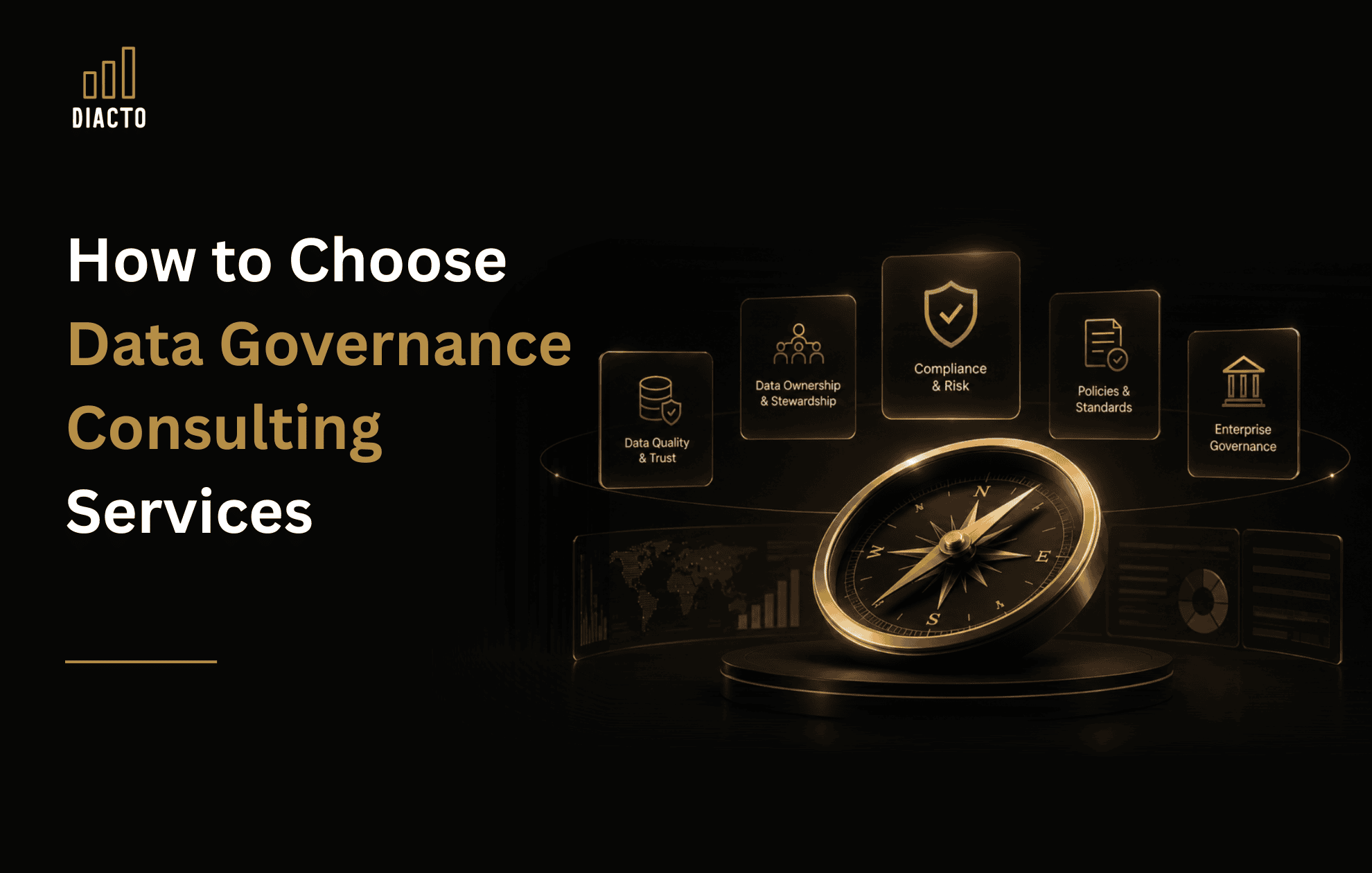
Choosing the right partner is about more than policies, metadata, or compliance documents. Effective data governance consulting services help an enterprise turn fragmented data into trusted, usable intelligence across data engineering, BI, analytics, AI, and automation. The best fit is a consulting team that can connect strategy with implementation, support complex operating environments, and keep business outcomes at the center.
Enterprise data governance consulting services should deliver a practical operating model for how data is collected, transformed, secured, shared, measured, and used. That means defining ownership, quality standards, access rules, reporting logic, and decision workflows, but it also means implementing the systems that make those rules usable day to day. A strong partner does not treat governance as a documentation project; they make it part of how your enterprise runs.
At a practical level, good governance answers questions that affect every department. Which data source is trusted? Who owns customer, finance, product, or operational data? How are dashboards certified? Which AI use cases can safely use enterprise data? Without clear answers, teams create duplicate reports, argue over numbers, and slow down decisions.
The right consulting partner should help you build data governance solutions that are scalable, technical, and business-friendly. This is where a firm such as Diacto fits naturally into the conversation: enterprises need guidance that spans modern data platforms, analytics adoption, automation opportunities, and the governance structures required to make all of it reliable.
Many enterprises begin by asking which platform they should buy or which dashboard tool they should standardize on. Those questions matter, but they come after a more important one: what business decisions should your data improve? Governance should help teams reduce manual effort, increase confidence in reporting, identify growth opportunities, and respond faster to operational change.
A good consulting engagement should clarify outcomes such as:
This outcome-first approach separates strategic data management consulting from generic implementation work. The goal is not simply to move data into a warehouse or create dashboards. The goal is to make data easier to trust, easier to use, and easier to turn into action.
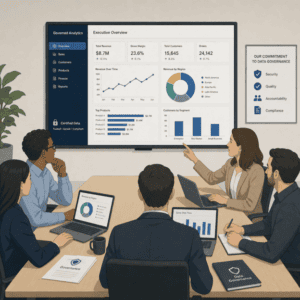
Modern governance works best when it is embedded across the full data lifecycle. That lifecycle typically begins with data engineering, where data is extracted, cleaned, modeled, and moved into scalable platforms. It continues into business intelligence, where teams use trusted datasets to build dashboards, scorecards, and operational reporting. From there, analytics helps the enterprise identify patterns, forecast outcomes, and uncover opportunities. AI and automation then extend those capabilities by recommending actions, triggering workflows, or supporting teams with intelligent agents.
A capable consulting partner should understand how these layers work together in one ecosystem:
This is where governance becomes a business accelerator. When data engineering, BI, analytics, AI, and automation are designed as one connected ecosystem, enterprises avoid the trap of isolated tools and disconnected initiatives.
Technology expertise matters, especially in large enterprises where performance, integration, security, and adoption requirements are demanding. A consultant should be able to explain not only which tools they know, but how those tools support governance and transformation in practice.
For example, Snowflake can support scalable cloud data warehousing and governed data sharing. ClickHouse may be useful for high-performance analytical workloads where speed and scale are important. DOMO can bring together data apps, dashboards, embedded analytics, and operational BI experiences. Power BI and Tableau remain important for enterprise reporting, visualization, and self-service analytics across business teams.
A strong partner should have practical experience designing how these technologies integrate, not merely installing them. Diacto’s expertise across DOMO, Snowflake, ClickHouse, Power BI, and Tableau is relevant because enterprises often need mixed environments to work together cleanly. Governance must account for how data moves between platforms, how metrics remain consistent, how access is controlled, and how users consume insights in the tools they already rely on.
A solution is enterprise-ready when it can handle scale, complexity, security requirements, stakeholder alignment, and long-term change without breaking down. For multinational organizations, this often includes multiple regions, languages, regulations, departments, legacy systems, and reporting standards. Governance must be flexible enough to support local needs while maintaining global consistency.
When assessing a partner, look for evidence that they can support complex data transformation initiatives, not just isolated dashboards or one-off migrations. Enterprise-ready data governance solutions usually include clear ownership models, repeatable delivery methods, platform architecture, documentation, enablement, and support for adoption across technical and non-technical teams.
Important signs include:
A partner that can only speak to architecture may struggle with adoption. A partner that can only speak to business goals may struggle with execution. The right fit can do both.
Many consulting firms offer similar-sounding governance frameworks. The difference appears when the work moves from strategy slides into real enterprise use. Proprietary data and AI innovation can help accelerate adoption, tailor solutions to business workflows, and create experiences that generic tooling does not provide.
For example, custom AI agents can help users query governed data, summarize trends, or support repeatable decisions when they are designed with appropriate controls. DOMO Bricks can extend standard analytics experiences with customized, interactive components. Embedded analytics can place trusted insights directly inside the applications and workflows where employees already work. Purpose-built platforms can unify data, reporting, automation, and AI around specific operational needs.
These capabilities matter because governance should not make data harder to use. It should make trusted data easier to access, interpret, and act on. Diacto’s focus on custom AI agents, DOMO Bricks, embedded analytics, and purpose-built platforms helps differentiate a transformation program from a generic consulting engagement.
Before choosing a provider, evaluate whether the consulting team can support strategy, architecture, implementation, enablement, and continuous improvement. The best partner should be able to meet your enterprise where it is today while building a path toward a more mature data ecosystem.
Use this checklist during evaluation:
The right data governance consulting services help your enterprise move from fragmented data to actionable insight. That shift improves efficiency by reducing manual work, improves decision-making by creating trusted information, and supports growth by making analytics, AI, and automation easier to scale.
For enterprises that need more than a basic framework, Diacto offers a relevant model: combine data management consulting, modern data stack expertise, enterprise-ready delivery, and differentiated AI and analytics innovation. When governance is designed this way, it becomes more than control. It becomes the foundation for smarter operations, faster decisions, and a data ecosystem that can grow with the business.