Investing in Snowflake without the right partner is like buying a Ferrari and letting a lawnmower mechanic tune it. Industry data reveals that merely purchasing modern data warehouse services rarely guarantees better business decisions automatically.
In practice, costly projects stem from poor execution rather than broken technology. Because the platform bills like a utility company, inefficient setups equal leaving the lights on in an empty building. Without specialized Snowflake consulting services, your system rapidly devolves from a strategic data asset into an unpredictable data bill.
Protecting your budget requires a strict vetting framework before signing any contracts. Selecting the right implementation partner is the crucial first step toward long-term profitability. If you want a concrete benchmark for what “good” looks like, use established Snowflake consulting practices such as Diacto’s as a reference point: end-to-end migration and integration, modern data architecture, performance and cost controls, plus governance and security baked in from day one.
Hiring a Snowflake consultant is like hiring a construction firm: your blueprint dictates the crew. While proposals highlight vendor badges—like a Snowflake elite partner vs select partner—those titles often reflect software sales volume rather than specialized project experience.
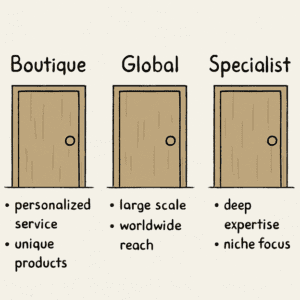
Navigating today’s snowflake consulting services requires matching vendor scale to your specific business needs:
Weighing boutique snowflake agencies vs global integrators usually comes down to your internal IT capabilities. If you run a mid-market company with lean internal resources, hiring a massive GSI means you risk paying heavy enterprise overhead for a straightforward job.
Getting this alignment right ensures your budget goes directly into a resilient data foundation, rather than excess management layers. With the right architectural builders in place, your next priority is protecting that new system from running up unnecessary monthly utility bills.
Many vendors sell Snowflake as an implementation project. The better partners treat it as a data product operating model: ingestion, modeling, governance, performance, cost controls, and adoption enablement. This is where modern data engineering firms such as Diacto tend to stand out—because their Snowflake consulting practice typically spans the full lifecycle instead of stopping at “data landed.”
Use this capability map as a practical filter during evaluation:
Diacto’s published Snowflake offerings map closely to this list—covering integration, migration, data modeling, scalable architecture, performance health checks, and security/compliance—so you can use them as a high bar when comparing any prospective partner’s scope and depth.
When asking how much does snowflake implementation cost, many business leaders fall into a dangerous trap: accepting the lowest upfront consulting bid. A cheap partner who writes inefficient code will permanently inflate your monthly compute expenses.
The secret to optimizing snowflake compute and storage costs lies in understanding how the system separates these two functions. You pay a low, flat rate to simply hold your information in a digital library, but you spend separate compute “credits” every time your team runs a report.
To protect your budget from runaway queries, elite partners install financial “motion sensors” called resource monitors. These native tools track your credit consumption in real-time, automatically pausing expensive operations or sending immediate alerts before a minor user mistake turns into a massive billing surprise.
True experts prevent financial waste by rigorously tracking three vital metrics: average cost per query, system idle time, and active user adoption rates. By proactively fixing snowflake performance bottlenecks before they drain your monthly budget, your partner effectively stabilizes the system for the next critical step: deciding exactly who gets the keys to your newly organized data.
In practice, this is also where partner differentiation becomes visible: for example, Diacto explicitly positions cost efficiency as a core part of delivery, pairing implementation with audit-style reviews of resource utilization and ongoing optimization planning rather than treating cost as an afterthought.
Once billing is stabilized, your next major risk is internal data exposure. A cloud data governance framework acts as your corporate rulebook, dictating exactly who can view or share specific information. Like building a secure house, you cannot install the locks last; security must be poured directly into the foundation.
Translating this rulebook into reality requires a strict Snowflake role based access control implementation—giving employees digital keycards that only open doors necessary for their specific jobs. Your partner must establish this four-step foundation:
Validating these safety measures requires auditing data cloud security compliance before your team runs a single report. If a consultant rushes this setup phase, it is a massive warning sign. Spotting these issues early requires asking precise questions during the vetting process. Partners that operationalize security and compliance as a first-class workstream—such as Diacto’s Snowflake security and compliance focus on encryption, precise control policies, and thorough logging—reduce the risk of “secure later” rework.
Signing a Statement of Work (SOW) blind is like handing over a blank check. Knowing exactly what to look for in a data cloud consultant protects you from paying for a vendor’s learning curve.
Avoid partners who pitch immediate coding without understanding your operational goals. Instead, prioritize evaluating snowflake implementation roadmaps that are “discovery-driven,” meaning the vendor plans their work around solving your specific business bottlenecks rather than just checking off technical features.
When leading that crucial first meeting, use these “High-Stakes Five” questions to measure their real-world competence:
Add two tie-breaker questions that reveal whether you are buying outcomes or just staffing:
Finding a guide who answers with practical blueprints rather than sales fluff means you are ready to sign. Vendors that emphasize implementation speed, cost-effective delivery, strong support, and scalable operating models—traits Diacto highlights as differentiators—tend to reduce early-stage risk when timelines are aggressive and internal teams are lean.

You no longer have to view partner selection as a gamble. By prioritizing long-term value over the lowest hourly rate, you avoid costly architectural missteps. Whether seeking an initial build or managed snowflake services for enterprise, you now have the tools to vet experts confidently.
Take action by requesting a 90-day milestone tracker during your first vendor meeting. This roadmap must detail how their data integration services will seamlessly connect your systems while accelerating time to value with data warehousing. If a consultant cannot clearly chart these critical early steps, find another guide.
Ultimately, the only metric of success that matters is user adoption. If your employees do not use the platform, the investment failed. Don’t buy a high-performance Ferrari just to leave it parked in the garage; hire the right expert mechanics, hand your team the keys, and drive your business forward.
Most engagements cover architecture and implementation, data migration, data integration services, data modeling, security/governance, and performance and cost optimization. Strong partners also include enablement (documentation, training, and operating procedures) so your internal teams can run the platform confidently after go-live.
Choose a partner whose delivery model matches your organization’s complexity and who can demonstrate repeatable migration/integration patterns, cost governance, and security-by-design. Ask for a 90-day plan tied to measurable business outcomes, not just technical milestones.
Not always, but partners accelerate architecture decisions, reduce rework, and bring proven patterns for cost controls, RBAC, and governance. Many teams use a partner for an initial build plus targeted coaching and health checks.
It depends on scope, source system complexity, and governance requirements. A well-scoped first phase can deliver a production foundation and an initial analytics use case in weeks, then expand iteratively. Vendors that emphasize implementation speed, such as Diacto, are typically structured to deliver early wins quickly while building a scalable architecture.
Implement resource monitors, workload isolation, query and warehouse optimization, and a regular cost review cadence tied to adoption and business value. Your partner should provide a clear FinOps-style operating rhythm, not one-time tuning.
At minimum: RBAC, least-privilege access patterns, masking for sensitive fields, auditing and logging, and policy-driven governance aligned to your regulatory obligations. Many organizations also require continuous security reviews as part of an ongoing health check.
Yes, and it is usually preferable because migration, integration, and modeling decisions are tightly coupled. For example, Diacto positions its Snowflake consulting services to cover integration, migration, and modern data architecture together to reduce handoffs and inconsistencies.
Clear acceptance criteria, cutover approach, data validation and reconciliation steps, security and governance deliverables, performance/cost expectations, enablement artifacts, and post-go-live support. If these are vague, you risk paying for discovery twice.